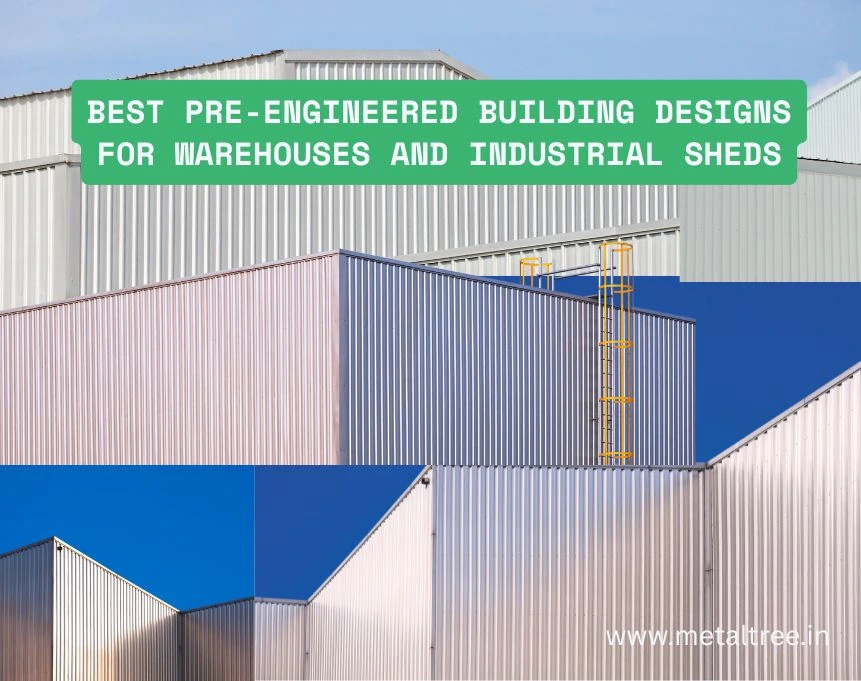
Unlock efficiency and cost savings with strategic Pre-Engineered Building Designs - pre-engineered buildings (PEBs) are transforming the industrial landscape in India. A logistics firm faces soaring construction costs and long completion times, while a manufacturing company struggles with space constraints and energy expenses. Pre-engineered building solutions address these challenges head-on by offering rapid installation, flexible layouts, and superior durability.
Introduction
A mid-sized manufacturing company in Pune recently faced crippling delays when building a conventional steel warehouse. Endless paperwork, long lead times for raw materials, and unpredictable labor costs hindered their operations. Meanwhile, a Delhi-based logistics firm struggled to expand its cold-storage facility, unable to modify the design without prohibitive expense. Both businesses share one crucial need: a fast, flexible, and cost-effective building solution that can adapt as their operations evolve.
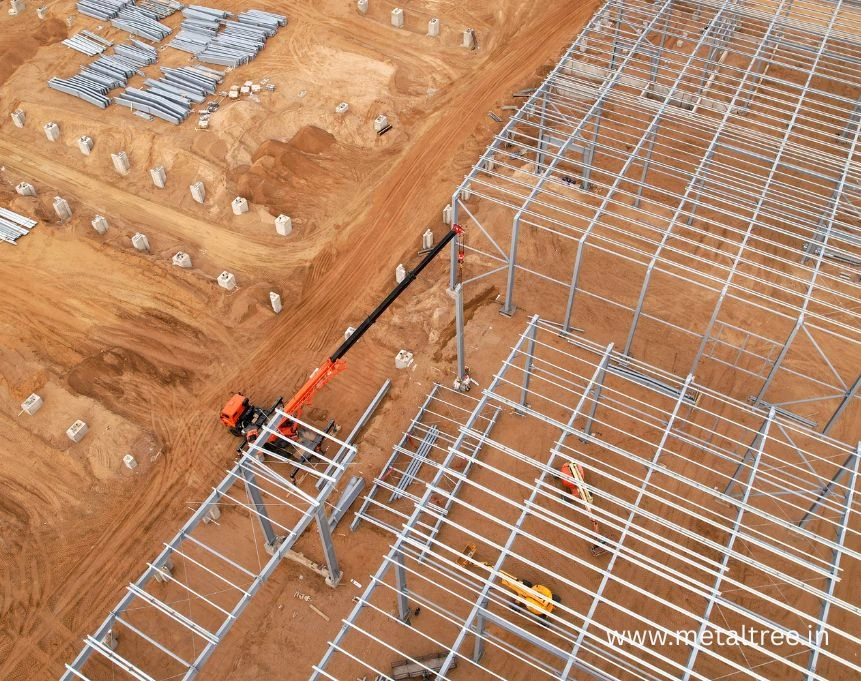
Pre-engineered buildings (PEBs) offer the answer. With components fabricated in factory environments to exact specifications, PEBs deliver streamlined onsite assembly, minimal waste, and optimized performance.
2. Why Pre-Engineered Buildings Matter
Pre-engineered buildings have reshaped industrial construction by optimizing every stage:
- Speed of construction: Factory fabrication reduces onsite work by up to 50%.
- Cost efficiency: Standardized components and reduced labor translate to savings of 20–30%.
- Design flexibility: Wider column spacing, customizable mezzanines, and adaptable roof pitches suit diverse needs.
- Durability: High-strength steel frames and corrosion-resistant panels withstand harsh environments.
Such advantages make PEBs the preferred choice for warehouses, distribution centers, manufacturing sheds, and cold-storage facilities across India.
3. Key Design Principles for Warehouses and Industrial Sheds
Structural Framing Systems
Choosing the right framing system is crucial. Portal frames—two columns joined by a beam—are common for clear spans up to 30 meters, ideal for large storage areas. Multi-span rigid frames can extend beyond 60 meters, accommodating heavy cranes and multiple internal bays.
Roof and Wall Panel Options
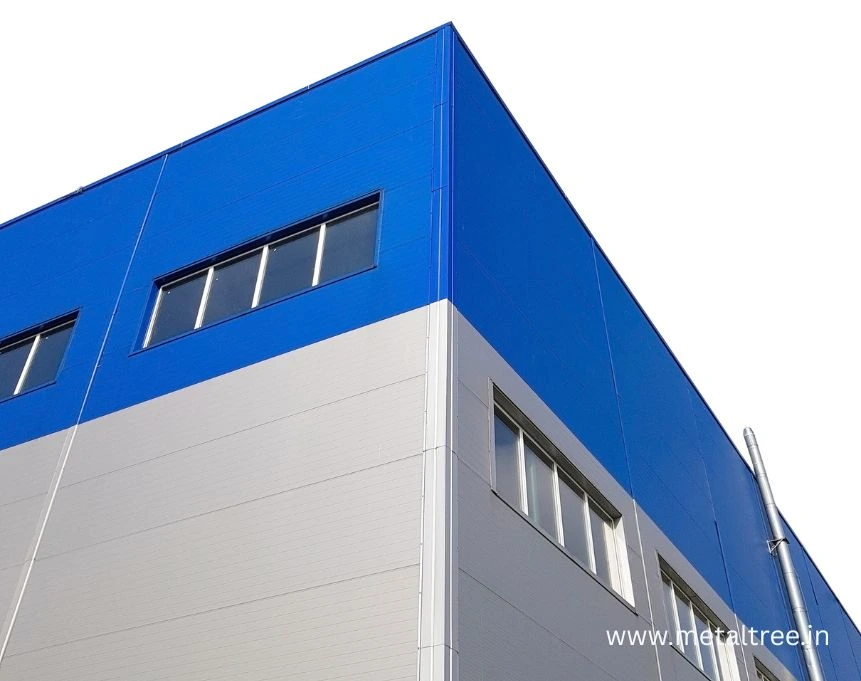
Insulated sandwich panels, box profile sheets, and standing seam metal roofs each offer unique benefits. Sandwich panels combine thermal performance with quick installation. Box profile sheets are budget-friendly and durable, while standing seam roofs provide superior weather resistance.
Insulation and Energy Efficiency
In tropical climates, energy costs can be staggering. Continuous insulation layers (polyurethane, rockwool) maintain internal temperatures, reducing HVAC loads. Reflective roof coatings further cut cooling costs by up to 15%.
Column Spacing and Clear Span
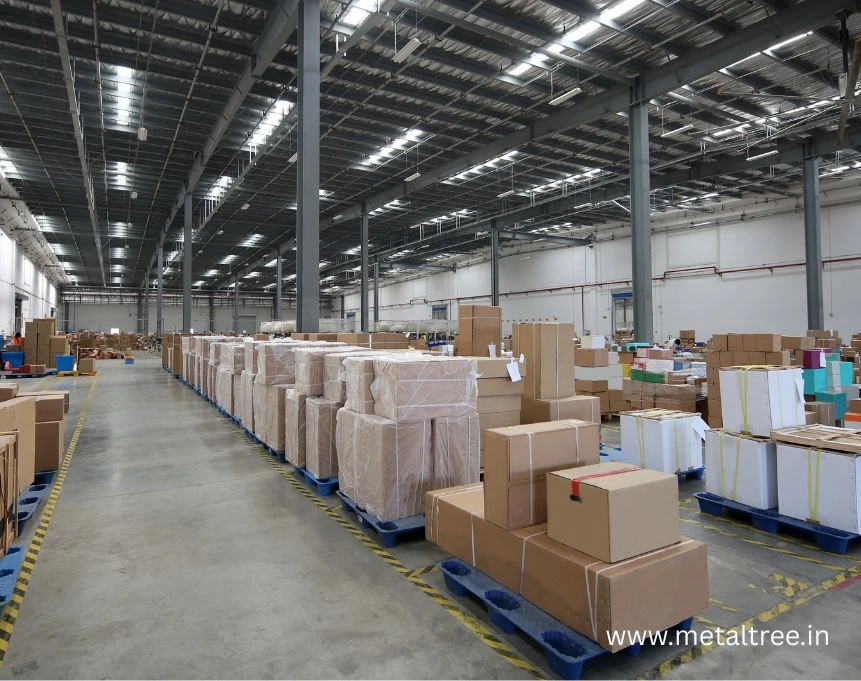
Larger clear spans free up interior layout, eliminating obstruction and streamlining material handling. Typical clear spans range from 12 to 30 meters. Wider spacing reduces the need for interior columns, enhancing operational flexibility.
4. Popular PEB Configurations
Single-Slope Roof Design
Often used for lean-to extensions, single-slope roofs enable simplified drainage and easier installation of solar panels. They suit loading docks and storage lean-tos, adding just enough extra space without complex framing.
Multi-Span Clear-Span Buildings
Characterized by uninterrupted interior volume, clear-span buildings support tall racking systems and heavy-duty cranes. These structures leverage portal frames with moment connections for strength and rigidity.
Mezzanine-Integrated Structures
Adding a mezzanine level maximizes vertical space, ideal for offices, storage, or light-processing units. Modular mezzanine systems can be installed post-construction, offering future scalability.
Portal Frame Industrial Sheds
The classic “A-frame” sheds feature pitched roofs and rigid portal frames. Commonly used across manufacturing parks, they allow crane support beams and overhead conveyors to be mounted effortlessly.
5. Customization and Modular Extensions
A key advantage of PEB design is modularity. Clients can select bay spacings, roof slopes, bracing configurations, and expansion joints. Future extensions are simpler: existing frames can be bolstered, and additional bays added with minimal disruption.
6. Material Selection and Quality Assurance
Choosing reputable steel grades (IS2062, ASTM A36) ensures structural integrity. Panel coatings (Galvalume, zinc-aluminum) protect against corrosion in coastal or industrial environments. Third-party inspections - NABL-accredited labs for tensile and hardness tests- maintain quality standards.
7. Cost Analysis and ROI
A comparative cost study shows PEBs often cost INR 2,200–2,800 per sq ft, versus INR 3,000–3,600 per sq ft for conventional steel-concrete construction. Rapid occupancy enables earlier revenue generation, improving internal rate of return (IRR) by 3–5 percentage points.
| Metric | PEB Solution (Approx) | Traditional Build (Approx) |
| Construction Cost per sq ft | INR 2,200–2,800 | INR 3,000–3,600 |
| Construction Time Reduction | 40–50% | Baseline (100%) |
| Energy Savings (annual) | 10–15% | Baseline |
| ROI Improvement | +3–5 ppt | Baseline |
8. Compliance with Indian Standards
PEB designs must adhere to IS codes:
- IS 800 for steel structures
- IS 875 for wind loads
- IS 1893 for seismic design
These ensure safety against earthquakes and cyclones common in many Indian regions.
9. Installation and Project Timeline
Typical PEB project phases:
- Design and Engineering (4–6 weeks)
- Fabrication (6–8 weeks)
- Delivery and Site Prep (2 weeks)
- Erection and Finishing (4–6 weeks)
Total turnaround: 16–22 weeks, compared to 30+ weeks for conventional builds.
10. Sustainability and Green Building Practices
PEBs align with green building concepts:
- Recyclable steel reduces embodied carbon by 30%.
- Daylighting via translucent roof panels lowers electricity use.
- Rainwater harvesting systems can integrate into roof design.
These features support LEED and GRIHA certifications.
11. Maintenance and Lifecycle Considerations
Routine inspections of panel seals and protective coatings extend service life beyond 50 years. Easy replacement of panels and purlins minimizes downtime. Steel frames resist pests and fungal decay common in wooden structures.
Conclusion
Pre-engineered buildings offer unparalleled advantages for warehouses and industrial sheds in India. Rapid delivery, cost savings, energy efficiency, and design flexibility empower businesses to scale operations swiftly and sustainably. By partnering with an experienced PEB provider, firms can unlock significant ROI and future-proof their infrastructure.
Ready to take advantage?
Reach out to Metal Tree today for a personalized consultation and start building your business success story.
FAQs
Q1: How long does a PEB project take from design to commissioning?
A: Typically 16–22 weeks, depending on complexity and site readiness.
Q2: Are PEBs suitable for cold-storage warehouses?
A: Yes. Insulated sandwich panels and controlled framing enable strict temperature maintenance.
Q3: Can I expand my PEB facility later?
A: Absolutely. Modular bay extensions can be added seamlessly to existing frames.
Q4: What level of customization is available?
A: From roof slope and panel type to mezzanine floors and office partitions—PEBs are highly customizable.
Q5: Does a PEB comply with local building regulations?
A: Designs adhere to IS codes (IS 800, IS 875, IS 1893) and local municipal bylaws.
Follow us on: