In today’s competitive industrial landscape, Indian businesses face mounting pressure to build infrastructure quickly without compromising on quality or budget. Whether you’re a logistics provider, e-commerce company, or manufacturing enterprise, finding the right warehouse solution determines how efficiently your operations run. Traditional construction methods consume months of precious time and drain resources through unexpected delays and material wastage.
Consider a realistic scenario: a manufacturing company in Mumbai needed a 50,000 sq ft storage facility within four months to handle rising demand. Conventional RCC construction would typically take close to double that time, putting orders, client commitments, and cash flow at risk. This kind of situation is increasingly common across India and is pushing business owners to look beyond traditional, time-consuming construction practices.
Fortunately, pre-engineered buildings for warehouse construction have emerged as a transformative alternative. Instead of constructing everything from scratch on-site, these warehouses use factory-manufactured steel components that arrive ready for quick assembly, dramatically reducing time, waste, and uncertainty. Metal Tree, a specialised PEB manufacturer in India, leverages this approach to deliver modern warehouses that are faster to build, more durable, and more economical over the long term.
What Are Pre-Engineered Warehouse Buildings?
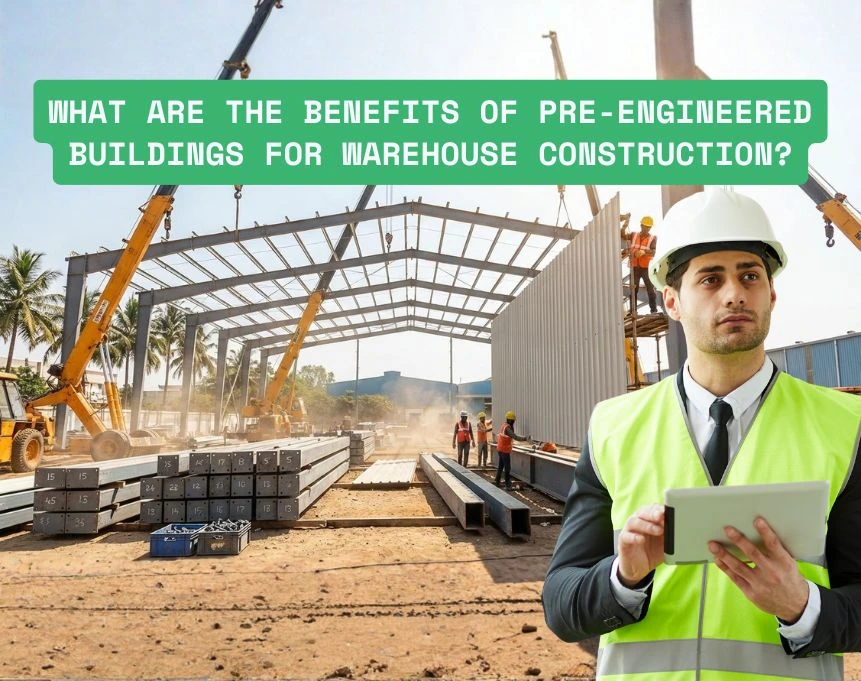
Pre-engineered warehouse buildings are steel structures in which the main components—columns, rafters, purlins, roofing sheets, and wall cladding—are designed and manufactured in a factory and then bolted together at the site. Unlike conventional construction, where most fabrication and adjustments happen on-site, PEB systems are engineered with precision software and manufactured under strict quality control before dispatch.
This off-site manufacturing process brings a high level of accuracy to the project. Structural members are pre-cut, drilled, and welded in the factory, so on-site work focuses mainly on assembly rather than fabrication and rectification. Because of this, the erection process becomes faster, cleaner, and far less dependent on skilled labour availability, which is a major bottleneck in many Indian industrial areas.

Speed: Warehouses Ready in Weeks, Not Months
Speed is one of the biggest reasons Indian businesses are shifting to pre-engineered buildings for warehouse construction. A conventional RCC warehouse can easily take six to twelve months to complete, especially when dealing with foundations, brickwork, plastering, curing time, and finishing. In contrast, a well-planned PEB warehouse of similar size can often be made operational in eight to sixteen weeks, depending on project complexity and site conditions.
This acceleration comes from parallel activity: while civil works like foundations are being completed at the site, steel components and roof systems are manufactured at the factory. As soon as the site is ready, steel frames, roofing, and cladding can be erected quickly using cranes and a relatively smaller crew. For businesses where time-to-market is critical—such as e-commerce, 3PL logistics, FMCG, and retail distribution—this faster construction directly translates into earlier operations and faster revenue generation.
Cost-Effective Warehouse Construction
Cost-efficiency is another major advantage of choosing a PEB warehouse over a conventional building. Because components are manufactured in a controlled environment to precise specifications, there is significantly lower material wastage compared to site-based fabrication and shuttering-intensive RCC structures. This optimisation in design and material usage often results in overall project cost savings of around 20–25% when compared to traditional methods, especially for large-span industrial warehouses.
Labour costs also come down, as the erection process for PEBs is much faster and less labour-intensive. Fewer workers are needed for a shorter duration, and dependence on highly skilled on-site fabricators is reduced. In addition, the lower construction time means reduced overheads related to site management, equipment rentals, and project financing. When these savings are combined with lower long-term maintenance, the total cost of ownership of a PEB warehouse becomes far more attractive than a conventional warehouse.
Durability and Structural Strength
Pre-engineered warehouse buildings are designed using high-tensile steel and engineered to handle imposed loads such as wind, seismic forces, material loading, and handling equipment operations. The structure is modelled and analysed with design software to ensure that it performs safely and efficiently throughout its lifecycle. In many cases, PEB warehouses are specifically designed to meet IS codes and relevant standards for structural safety in Indian conditions.
Steel frames and members are protected with corrosion-resistant coatings and high-quality paint systems, increasing the building’s lifespan even in harsh environments such as coastal regions or industrial zones with high humidity and pollution. Unlike conventional RCC structures, which can suffer from cracking, spalling, and water seepage over time, a well-maintained PEB warehouse can retain its structural performance and appearance for decades with comparatively minimal intervention.
Flexible and Customizable Warehouse Design
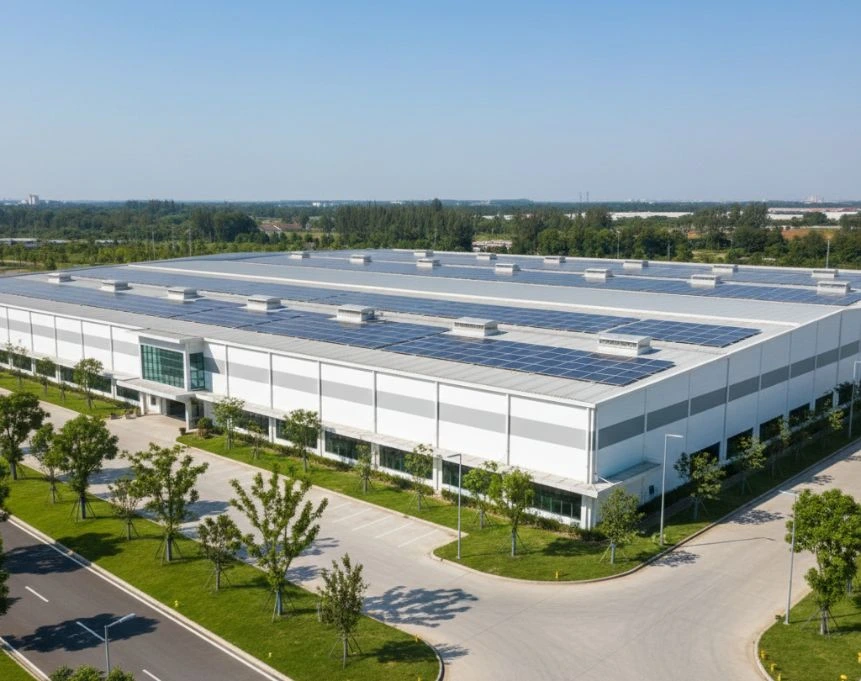
Every warehousing operation has unique requirements related to storage configuration, racking height, material flow, loading docks, and office integration. Pre-engineered buildings lend themselves very well to customisation because the entire layout and structural system can be tailored in the design stage. Clear-span widths, bay spacing, eave heights, and roof slopes can be adjusted to match the client’s operational needs, resulting in a warehouse that supports the business rather than restricting it.
For example, Metal Tree can design PEB warehouses with large clear spans and minimal internal columns, which is ideal for high-bay racking, wide movement aisles for forklifts, or large equipment zones. Options such as insulated sandwich panels for walls and roofs, provision for mezzanine floors, integrated office blocks, ventilators, skylights, and canopies for loading bays can all be incorporated into a single unified design. This flexibility makes PEBs suitable for general storage, cold storage, e-commerce fulfillment centers, industrial sheds, and more.
Scalability and Future Expansion
One of the most practical advantages of pre-engineered warehouse buildings is how easy it is to expand them as your business grows. Many Indian enterprises start with a certain capacity and then realize within a few years that they need to double their storage space. In a conventional structure, expansion often involves heavy demolition, complex structural stitching, and major disruption to ongoing operations.
A PEB warehouse, on the other hand, is typically designed with modularity in mind. Additional bays can be added along the length or width of the building by extending the steel frame and roofing system without disturbing the existing structure significantly. This allows businesses to phase their investment—building only what they need initially and expanding when demand justifies it—without wasting time and money later on. In some cases, PEB structures can even be dismantled and relocated if business strategies change or land availability shifts.
Energy Efficiency and Better Working Environment
Modern warehouses are no longer just metal sheds; they are active energy consumers with lighting, ventilation, cooling, and often office spaces integrated inside. Pre-engineered buildings can be designed with energy efficiency in mind from the beginning. For instance, insulated roof and wall panels help maintain more stable interior temperatures, which is crucial for cold storage, food processing, pharmaceuticals, and any operation sensitive to heat and humidity.
Natural lighting features such as polycarbonate skylights and translucent roof panels reduce the need for artificial lighting during daytime, thereby lowering electricity consumption. Properly planned ridge ventilators, turbo vents, louvres, and roof slopes help in heat dissipation and air movement, making the warehouse more comfortable for workers and reducing the load on mechanical ventilation systems. Over time, the combination of insulation, natural light, and efficient ventilation can significantly cut energy bills and improve employee productivity.
Low Maintenance and Long-Term Reliability
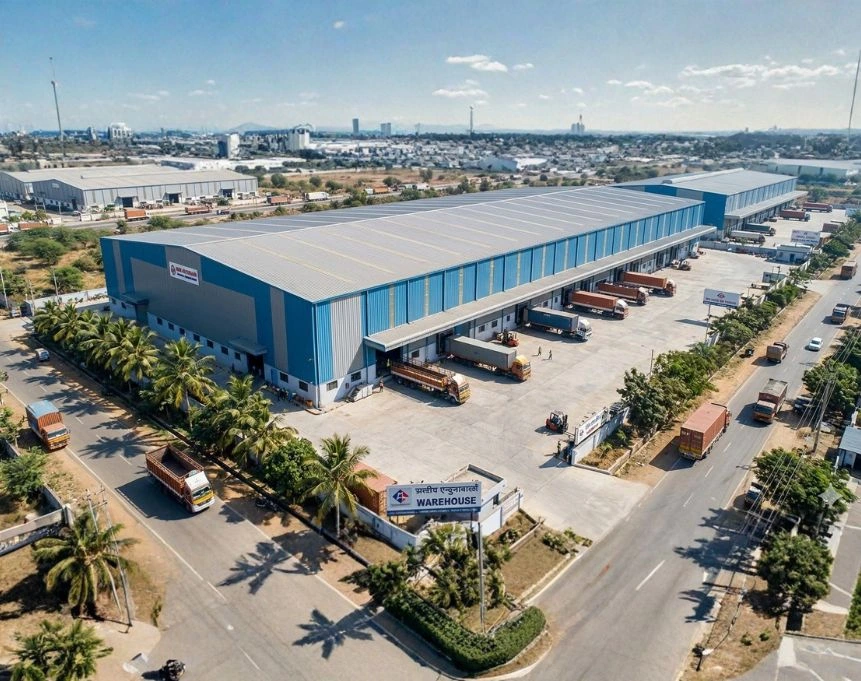
Pre-engineered warehouse buildings are designed to be low-maintenance compared to traditional RCC or brick-and-mortar structures. Since the main frame is steel and the cladding is usually pre-painted galvanised or galvalume sheets, there is no need for regular plastering, repainting of walls, or repairs related to dampness and seepage. Periodic inspection, cleaning of gutters and roof sheets, and touch-up of paint in exposed areas are usually sufficient to keep the structure in good condition.
The reduced maintenance burden directly saves both time and money, especially for facilities located in remote or industrial areas where skilled maintenance contractors may not be easily available. Moreover, fewer structural issues mean less unexpected downtime, which is critical for businesses that operate in warehousing and logistics on tight schedules. Over the life of the building, these small savings accumulate into substantial operational benefits and contribute to a better return on investment.
Sustainable and Environment-Friendly Construction
Sustainability is increasingly important for Indian companies, especially those working with multinational clients or targeting export markets that demand high ESG standards. Steel—being recyclable and reusable—provides a strong foundation for eco-friendly construction. A pre-engineered warehouse uses optimised steel sections and generates far less waste on-site compared to conventional RCC buildings, which typically consume more cement, sand, aggregates, and water.
Additionally, factory-controlled fabrication and faster on-site assembly reduce pollution, noise, and disturbance around the project location. When combined with features like efficient insulation, daylighting, rainwater harvesting, and rooftop solar integration, PEB warehouses can significantly reduce their environmental footprint over their lifetime. This not only supports corporate sustainability goals but can also help in meeting green building standards and improving brand image.
Why Metal Tree Is a Strong Choice for PEB Warehouses
Metal Tree specialises in designing and manufacturing pre-engineered warehouse buildings tailored for Indian business conditions. The company focuses on optimising designs for speed, cost, and structural performance while keeping flexibility and future expansion in mind. Components are produced in a controlled factory environment with modern equipment, ensuring consistent quality and tight tolerances.
Beyond design and manufacturing, Metal Tree offers support in layout planning, structural customisation, insulation options, and integration of features like mezzanines and office spaces. This end-to-end capability makes it easier for clients to move from concept to operational warehouse with fewer coordination issues. For businesses seeking a reliable, future-ready warehouse solution, partnering with an experienced PEB manufacturer like Metal Tree can significantly simplify the journey.
Frequently Asked Questions
Q1: How much faster can a PEB warehouse be built compared to a conventional one?
Pre-engineered warehouse buildings can often be completed and made operational in nearly half the time of a conventional RCC warehouse, with many projects finishing in about 8–16 weeks depending on size and site readiness. This time saving comes from parallel factory manufacturing and faster on-site assembly.
Q2: Are PEB warehouses really cheaper than RCC warehouses?
Yes, in many cases they are more economical overall. PEB warehouses typically reduce material wastage, cut labour costs, and shorten project durations, which together can save around 20–25% on total project costs when compared to similar conventional structures. Long-term maintenance and energy savings further improve cost-effectiveness.
Q3: Can a pre-engineered warehouse be customised for cold storage or special products?
Absolutely. PEB warehouses can be designed with insulated sandwich panels, temperature-controlled zones, vapour barriers, and special ventilation for cold storage or sensitive goods like pharmaceuticals and food products. The structural system is flexible enough to integrate these requirements from the design stage.
Q4: Is it possible to expand a PEB warehouse later?
Yes, expansion is one of the strengths of PEB systems. Additional bays can be added along the length or width of the existing warehouse with minimal disturbance. The modular steel frame makes it easier to plan phased expansion as business volumes grow, without the heavy demolition usually associated with RCC structures.
Q5: How durable are PEB warehouses in Indian climate conditions?
PEB warehouses are designed to withstand local wind loads, heavy rains, and seismic activity as per relevant Indian standards. With proper coatings and basic maintenance, the steel structure and cladding can perform reliably for decades, even in harsh or coastal environments.