
Introduction: The Real-World Costs of Construction Blunders
Without PEB Solutions in Businesses, What Could Happen?
Consider this:
A medium-sized manufacturing firm was preparing for a new factory for many months. They decided to use the conventional construction approach of brick and mortar along with a lot of manual work. However, during the project, they faced significant cost issues due to high material prices, a shortage of labor, and mid-project redesigns which resulted in slow progress piling on costs.
To make matters worse, their competitors who opted for the pre-engineered steel construction method completed their projects dramatically faster and cheaper, sometimes up to 40% faster. Fast forward to now, lots of businesses from retail stores to warehouses face this operational dilemma; And to embrace conventional methods, or implement PEB solutions?
This guide aims to ensure that you and your businesses are PEB construction ready.
In this blog we will discuss in detail each step included in the PEB project guide – PEB construction steps, effective steel building execution, mechanical project scheduling using PEB systems and smart overall project planning.
Curious about future-proofing your next project? Keep reading!
Table of Contents
- Introduction: The Real-World Costs of Construction Blunders
- Why PEB Solutions Need To Be Implemented Now More Than Ever
- Step by Step Guide for PEB Projects
- Benefits of Pre-Engineered Steel Construction
- Key Strategic Actions For Finishing PEB Construction Steps Seamlessly
- Common Challenges and How to Avoid Them
- Conclusion: Why Your Next Project Should Be a PEB
- Frequently Asked Questions
Why PEB Solutions Need To Be Implemented Now More Than Ever
Meeting industry goals of speed, cost, efficiency, and durability are no longer optional; they're paramount. Pre-engineered steel construction is able to meet these requirements flawlessly.
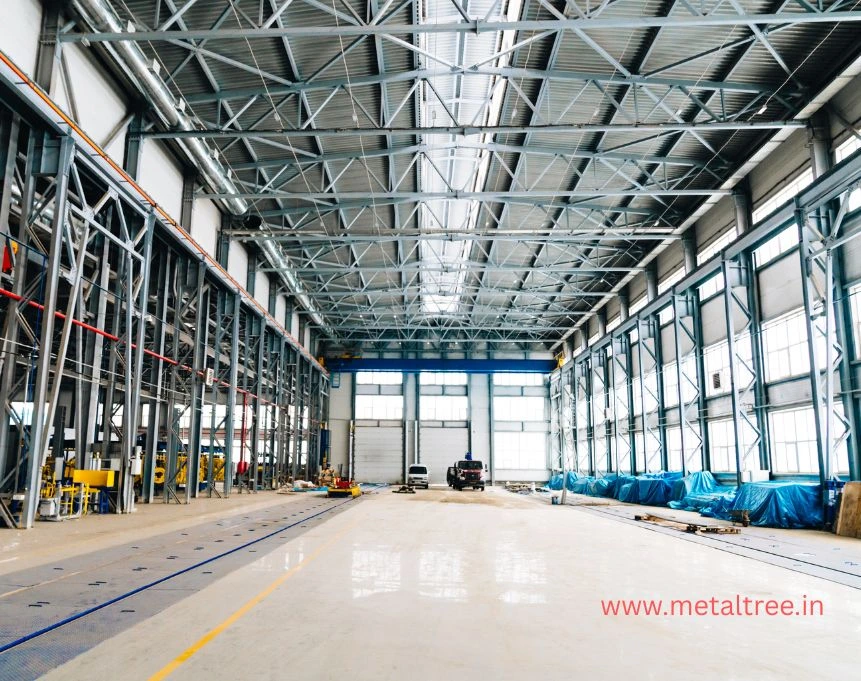
PEBs are not like other construction types; they are built in modules offsite to be rapidly assembled later on. This helps streamline timelines, reduce overhead costs, as well as provide flexible, strong scalable frameworks.
We, at Metal Tree, have noticed a trend where businesses are not just using steel buildings for factories. Now, they are implementing them in showrooms, airports, warehouses, and even schools.
Why is this happening?
Because companies now have to juggle around expensive mistakes and lengthy downtimes and that’s not an option.
Step by Step Guide for PEB Projects
Step1: Your project scope needs to be defined first:
Tip: Aim for the long run and plan accordingly. All your current and future needs should be fulfilled by the structure.
Now, set the following needs to the prospective suppliers:
- The purpose
- The building size, dimensions, and layout
- Future expansion plans
- Specific functions or loading requirements
Step 2: Find Your Right PEB Partner
Focus on their reputation and make sure that they fulfill high standards with their materials as well as custom design options. A full suite of services will save you time as well since you can get everything from a single provider.
As in example they offer:
- Quality end to end service that includes designing and erecting
- Powerful support systems
- Outstanding experience
Step 3: Design and Engineering Phase
Here's where your vision takes shape.
Expert engineers will prepare 3D models, detailed drawings, and load calculations to ensure safety and efficiency.
Project planning with PEB involves integrating architectural preferences with technical standards -like IS codes in India - to ensure regulatory compliance.
Flexibility is the biggest advantage here - modular designs, expansion-ready frames, custom accessories - you name it.
Step 4: Manufacturing and Procurement
Manufacturing begins at the factory as soon as designs are approved.
Key processes include:
- Fabrication of primary and secondary framing
- Quality controlled burning and welding
- Corrosion resistant protective coating application
The foundation has to be perfect as steel building implementation success starts in the factory. If precision is maxed out here, site works later on become low hassle.
Step 5: Site Preparation and Foundation
Orders for site specific parts are placed while the site is being prepared.
- Soil probing and Geotechnical surveying
- Stratum analysis based foundation design
- Excavation and associated civil works
Tip: If you shift some of the work to overlap with the foundation while you manufacture, you can save crucial time on the project.
Step 6: Steel Building Implementation and Erection
This is by far the most noticeable step – setting up the steel structure.
Components pre-fabricated are sent and skilled crews bolt and assemble in minutes which diminishes on-site wastage.
Their use also improves the speed of this operation substantially.
Let’s think critically: Climate conditions, site logistics, and the level of experience of the crew working on site profoundly affect how quickly (and safely) you can complete this stage.
Step 7: Final Inspections and Handover
There are no final checks that are optional before moving in. Ensure:
- Table alignment and levels check
- Strength of bolted connections
- Tightness of roofing and cladding
- Finish paint and surface
The new PEB is your immediate inspection-ready building. Occupancy as promised, member intake, ahead of schedule, within budget, and future capable.
Benefits of Pre-Engineered Steel Construction
- Fast: 30-50% time savings completing the tasks
- Cost Effective: Labor, material waste and mistakes are minimized
- Long Lasting: Corrosion, earthquakes, and heavy loads have no effect
- Flexibility: Additional construction or modification is simple at a later date
- Green: Use materials that have a low carbon footprint and are easily recycled
Well, it is practically self-explanatory why PEB solutions are implemented. Otherwise, you risk to lose your competitiveness.
Key Strategic Actions For Finishing PEB Construction Steps Seamlessly
- Synchronize PEB construction steps with all other project specialists as early as possible architects, engineers, and foremen
- Choose appropriate grades of materials for the region you are working in.
- Schedule delivery to the site to eliminate congestion conditions.
- Train workers on assembly for better efficiency.
- Track work in real-time using up to date digital tools.
Failing to do so will cost reputation and money.
Common Challenges and How to Avoid Them
Even the best plans can hit roadblocks. Here’s what to watch out for:
| Challenge | Solution |
| Design Miscommunication | Weekly coordination meetings |
| Delayed Material Deliveries | Buffer periods in your project schedule |
| Site Safety Risks | Safety drills and proper PPE |
| Poor Weather Conditions | Flexible scheduling and tent covers |
| Inexperienced Crews | Hire certified erectors |
Recognizing these hurdles early lets you steer clear with confidence.
"At Metal Tree, we believe in building the future, one steel structure at a time. By embracing pre-engineered steel solutions, we’re not just constructing buildings - we’re creating durable, cost-efficient, and sustainable spaces that stand the test of time. Partner with us to unlock the true potential of your next project, and let us help you build smarter, faster, and greener."
Conclusion: Why Your Next Project Should Be a PEB
- The construction landscape is shifting.
- Faster, smarter, greener solutions are the new norm.
- By embracing pre-engineered steel construction, you’re not just building faster; you're building smarter, better, and more future-proof.
At Metal Tree, we’ve seen firsthand how companies who adopted implementing PEB solutions early gained a critical edge - operationally and financially.
Are you ready to join them? Contact Us
Frequently Asked Questions
1. What industries are best suited for PEB construction?
PEB works wonderfully across industries - manufacturing, warehousing, retail spaces, agriculture storage, schools, and even airports.
2. How long does it typically take to complete a PEB project?
Depending on size and complexity, a PEB project can be completed in 2–6 months, significantly faster than traditional methods.
3. Can a pre-engineered building be customized for future expansion?
Absolutely. PEBs are designed for flexibility, allowing for easy vertical or horizontal expansions.
4. What is the average lifespan of a PEB structure?
With proper maintenance, a PEB building can easily last 30–40 years or more.
5. How does PEB construction affect sustainability goals?
PEBs are highly sustainable — they use recyclable materials, generate less waste, and are energy-efficient.
Follow us on: