Introduction
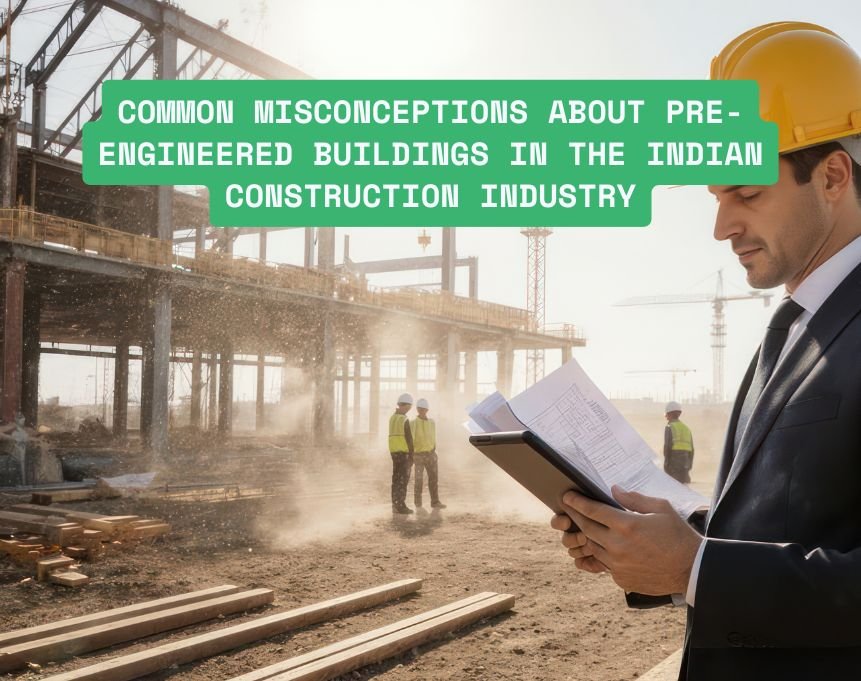
In India’s bustling industrial landscape, many business owners—whether running manufacturing firms, logistics hubs, or educational institutions—face persistent challenges with traditional building methods. Long construction timelines, escalating costs, and unpredictable quality often hamper project success. Enter pre-engineered buildings (PEBs), a transformative solution promising faster, cost-effective, and durable structures. Yet, despite growing adoption, PEBs are often misunderstood, with myths clouding their advantages. Clearing these misconceptions is vital for Indian businesses to fully benefit from this innovative construction technology.
Common Misconceptions About PEBs in India
A few prevalent myths continue to hold back wider acceptance of PEBs:
- PEBs Aren't Strong or Safe: Contrary to this belief, PEBs use high-strength steel, engineered precisely in factories under quality control, designed to endure heavy loads, adverse weather, and seismic events typical in India. 1
- PEBs Lack Durability: Modern PEBs feature corrosion-resistant coatings and treated steel that withstands rust and wear, promising long service life with minimal maintenance.
- PEBs are Plain and Unattractive: Advanced design software allows full customization of visuals and layouts, meeting aesthetic and functional preferences for commercial, industrial, and institutional buildings.
- PEB Construction Takes Longer: Actually, most building components are prefabricated off-site, minimizing on-site construction time to weeks instead of months. This reduces labor requirements and site disruptions.
- PEBs are Environmentally Harmful: PEB construction generates less waste, uses recyclable steel, and supports energy-efficient features, aligning with India’s sustainability goals.
- PEBs Can't Handle Natural Disasters: Designed as per Indian codes, PEBs offer reliable resistance to earthquakes, wind loads, and heavy rains, reflecting rigorous structural engineering standards.
Steel Building Myths Debunked
Steel, the backbone of PEBs, suffers from several misperceptions. Yet, factory precision manufacturing ensures uniform quality, thickness, and protective coatings that trump many traditional materials in strength and lifespan. Science-backed corrosion resistance and maintenance savings also translate to better long-term investment value. The modular bolted assembly further enhances structural integrity versus conventional weld-heavy steel construction.
Construction Industry Insights on PEB Benefits
Industries across India increasingly rely on PEBs for:
- Speed: Prefabrication cuts build times drastically, enabling faster business operations setup.
- Cost Savings: Less material waste, reduced labor costs, and lower maintenance deliver attractive ROI.
- Design Flexibility: Expansions or alterations are easier, helping adapt to dynamic business needs.
- Sustainability: Environmentally conscious methods and recyclable materials support green building trends.
PEBs have proven especially impactful in factories, warehouses, schools, and infrastructure projects, fueling efficiency and competitiveness.
PEB Education for Smarter Decisions
Business owners and construction professionals should seek credible expertise and certified manufacturers to understand PEB capabilities fully. Discarding outdated stereotypes opens doors to modern, optimized building solutions crucial for India’s industrial growth.
Conclusion:
Pre-engineered buildings stand out as a smart, efficient, and sustainable alternative in the Indian construction sector. By combating common misconceptions with facts about safety, durability, design, speed, and eco-benefits, businesses can embrace PEBs confidently, unleashing potential for faster growth and cost efficiency.
Reach out to Metal Tree today for a personalized consultation and start building your business success story.
FAQs
Q1: Are pre-engineered buildings safe and durable enough for Indian conditions?
Yes, PEBs use high-strength steel and corrosion-resistant coatings engineered to meet Indian safety standards and resist natural disasters.
Q2: How do PEBs compare cost-wise with traditional construction?
PEBs reduce labor, material wastage, and maintenance costs, offering significant savings without compromising quality.
Q3: Can PEBs be customized to meet architectural and aesthetic needs?
Absolutely, PEBs are highly flexible in design and can be tailored to both functional and visual preferences.
Q4: How long does it typically take to construct a PEB vs. a conventional building?
PEBs can be assembled in weeks due to off-site fabrication compared to several months for traditional construction.
Q5: Are PEBs environmentally friendly?
Yes, they produce less waste, use recyclable steel, and support features that improve energy efficiency.
Follow us on: