Imagine a rapidly growing logistics firm based in Mumbai. They have just secured a massive contract with a global e-commerce giant to handle their regional distribution. The opportunity is immense, but there is a catch: they need a fully operational, Grade-A warehouse ready in less than three months to catch the Q3 festive rush. A traditional brick-and-mortar construction project would take at least a year, burying their opportunity in dust and delays. This is a real-world business problem facing countless Indian enterprises today—the urgent need for speed without compromising on quality.
This is where Pre-Engineered Buildings (PEB) are revolutionizing the landscape. For business owners in India, the shift from conventional concrete structures to steel-based PEB solutions is no longer just an alternative; it is a strategic necessity. As industrial demands evolve, the agility provided by PEB structures benefits companies by allowing them to scale at the speed of the market. At Metal Tree, we have witnessed firsthand how this technology transforms blueprints into operational assets in record time.
In this comprehensive guide, we will explore exactly how PEB structures benefit modern industrial applications, why they are the preferred choice for forward-thinking manufacturers, and how they can save you significant time and capital.
What Exactly Are Pre-Engineered Buildings (PEBs)?
Before diving into the benefits, it is essential to understand what sets PEBs apart. Unlike traditional construction, where materials are brought to the site and assembled from scratch, a Pre-Engineered Building is designed and fabricated in a controlled factory environment. Key structural components—such as steel beams, columns, and roofing panels—are precision-manufactured to exact specifications.
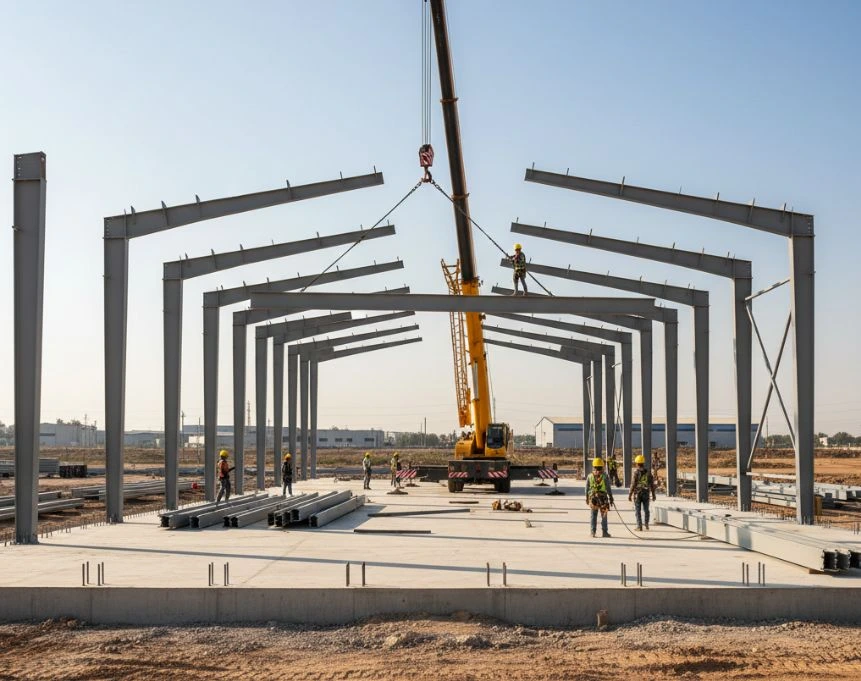
Once fabricated, these components are transported to the construction site and assembled like a giant, high-strength puzzle. This "pre-engineered" approach ensures that every bolt and beam fits perfectly, eliminating the unpredictability of on-site fabrication. The result is a structure that is lighter, stronger, and significantly more efficient than its conventional counterparts. For PEB manufacturers in India like Metal Tree, this process allows us to deliver high-quality structures that meet rigorous international standards.
1. Unmatched Speed of Construction
The most immediate and impactful way PEB structures benefit industrial projects is through sheer speed. In the industrial world, time is money. Every day your facility is under construction is a day you are not producing goods or storing inventory.
Parallel Processing Power
The secret to PEB's speed lies in parallel processing. In traditional construction, you must finish the foundation before you can even begin thinking about the superstructure. However, with PEBs, the fabrication of the steel structure happens in the factory while the site preparation and foundation work are being completed simultaneously.
4-8 Weeks Delivery
At Metal Tree, we can often deliver a complete warehouse or factory shell in as little as 4 to 8 weeks, depending on the complexity. Compare this to the 6 to 12 months required for a conventional concrete building. This rapid turnaround means you can achieve a faster Return on Investment (ROI) and enter the market months ahead of your competitors. For a factory shed manufacturer, speed is not just a feature; it is a promise of business continuity.
2. Significant Cost-Efficiency and ROI
While speed is critical, the bottom line always matters. One of the primary reasons for the explosion of the industrial warehouse construction market is the cost advantage of PEBs.
Material Optimization
PEB structures are designed using sophisticated software that optimizes the weight of the steel frames. By using tapered sections (where the steel is thickest only where the load is heaviest), we reduce the total amount of steel required. Less weight means lower material costs and lower transportation costs.
Reduced Labor Costs
Since the components are pre-cut, pre-drilled, and pre-welded in the factory, the on-site assembly is incredibly fast and requires fewer workers. This significantly reduces labor costs and minimizes the risk of accidents on site. Furthermore, the precision of factory manufacturing means there is virtually no material waste at the construction site, saving you money on debris removal and lost materials.
Long-Term Savings
The cost-effective industrial solution provided by PEBs extends beyond the initial build. Steel structures are incredibly durable and require minimal maintenance compared to concrete, which can crack and degrade over time. Lower maintenance costs over the lifespan of the building contribute to a healthier balance sheet for your business.
3. Design Flexibility and Customization
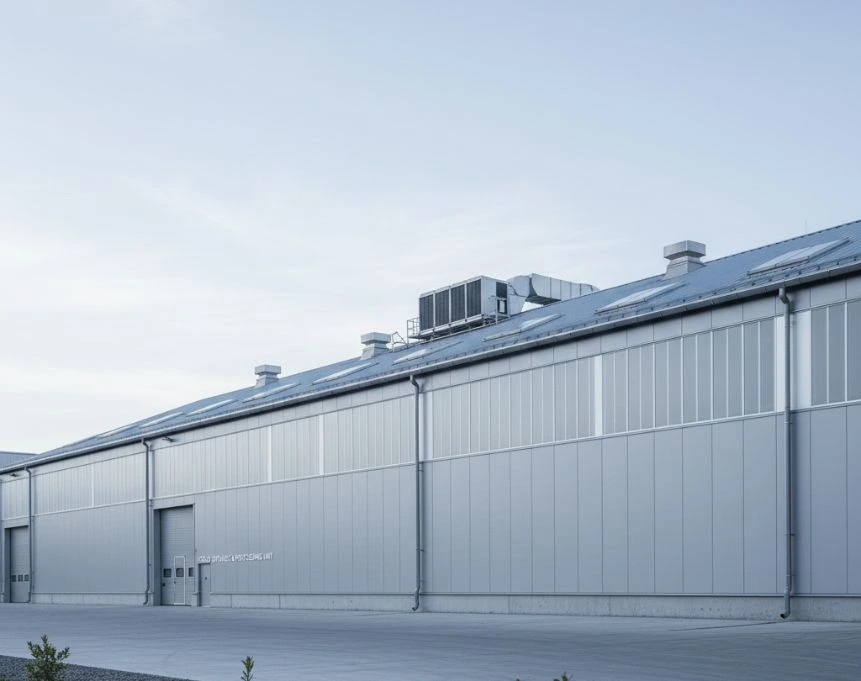
Modern industries have complex needs. A pharmaceutical plant has vastly different requirements than an automotive assembly line or an agricultural cold storage unit. This is where the versatility of custom pre-engineered building manufacturers truly shines.
Column-Free Interiors
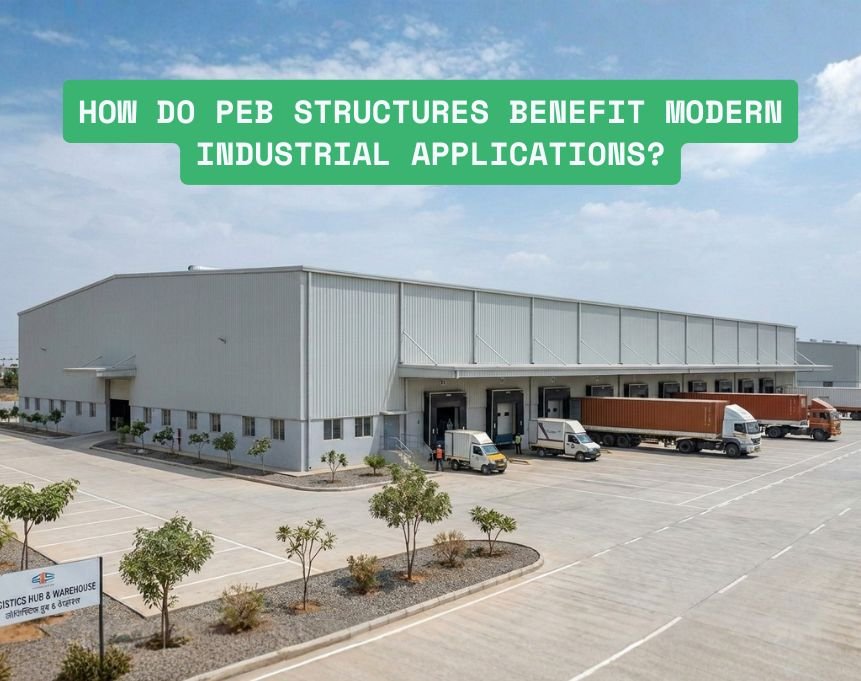
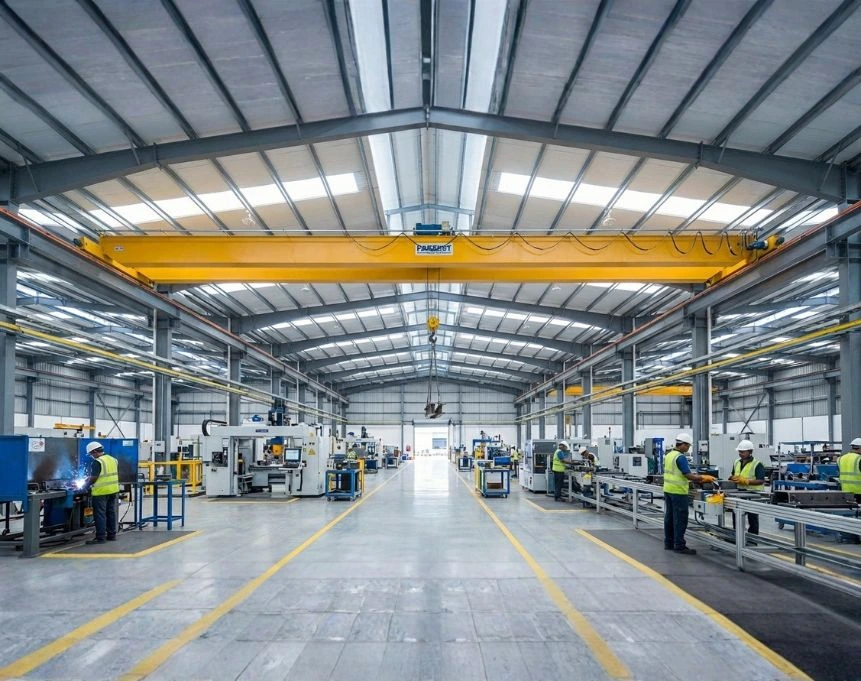
One of the standout features of PEBs is the ability to create massive clear spans—spaces without any internal support columns. For warehouses and logistics hubs, this is a game-changer. It allows for unobstructed movement of forklifts, automated guided vehicles (AGVs), and optimized racking systems. You get 100% usable floor space, maximizing your storage density.
Tailored to Your Operations
Whether you need a factory shed with a high ceiling to accommodate heavy machinery or a structure designed to support overhead cranes (a specialty at Metal Tree), PEBs can be customized to the millimeter. We can integrate:
- Mezzanine floors for office space.
- Canopies for loading docks.
- Specialized insulation for temperature control.
- Large sliding doors for heavy vehicle access.
This flexibility ensures that the building adapts to your business, rather than your business having to adapt to the building.
4. Durability and Weather Resistance
India’s diverse climate—from the scorching heat of Rajasthan to the heavy monsoons of Mumbai—demands buildings that can withstand the elements. Steel building manufacturers utilize high-tensile steel that offers superior strength-to-weight ratios.
Built to Last
PEB structures are engineered to withstand severe weather conditions, including high winds, heavy rainfall, and seismic activity. At Metal Tree, we use advanced coatings and galvanized steel to prevent rust and corrosion, ensuring that your investment stands strong for decades.
Fire and Safety
Safety is non-negotiable in industrial environments. Steel is non-combustible, and when coated with fire-retardant materials, it provides a high level of fire safety. This is a critical factor for industries dealing with flammable materials or high-value inventory.
5. Sustainability and Energy Efficiency
As the world moves towards greener practices, industrial construction is no exception. PEB structures benefits include a significantly lower environmental footprint compared to traditional methods.
Recyclability
Steel is the most recycled material on the planet. When a PEB reaches the end of its life cycle, nearly 100% of the steel can be recycled and reused, unlike concrete which ends up in landfills.
Energy Savings
Modern PEBs can be equipped with high-performance insulated sandwich panels for walls and roofs. These panels provide excellent thermal insulation, keeping the interior cool in summer and warm in winter. This drastically reduces the load on HVAC systems, leading to substantial energy savings. Additionally, the integration of skylights and polycarbonate sheets allows for abundant natural light, reducing the need for artificial lighting during the day. For businesses aiming for green building certifications (like LEED), PEBs are the ideal starting point.
Sector-Specific Applications of PEB
The adaptability of pre-engineered buildings makes them suitable for a wide array of sectors. Here is how different industries are leveraging this technology:
Manufacturing and Heavy Industry
For the manufacturing sector, the strength of the building is paramount. PEBs provide the robust framework needed to support heavy vibrating machinery and overhead cranes. Industrial shed builders prefer PEB because it allows for easy expansion. If your production capacity doubles in two years, a PEB structure can be easily expanded by adding more bays, without disrupting existing operations.
Warehousing and Logistics
With the e-commerce boom in India, the demand for Grade-A warehousing is at an all-time high. PEBs are the backbone of this sector. The ability to build high-height, clear-span structures allows logistics companies to utilize vertical space efficiently with high-bay racking systems.
Agriculture and Cold Storage
India’s agricultural sector is increasingly adopting PEB for cold storage facilities and food processing units. The superior insulation properties of PEB wall panels help maintain precise temperatures, reducing spoilage and energy costs.
Infrastructure Projects
From airport hangars to metro stations, PEBs are being used in critical infrastructure projects where speed and large open spans are essential. The scalability and quick deployment capabilities make them perfect for projects with tight deadlines.
Why Choose Metal Tree for Your PEB Project?
At Metal Tree, we understand that building a new facility is a significant milestone for your business. As one of the leading PEB manufacturers in India, we don't just sell buildings; we provide comprehensive solutions.
Our team of expert engineers and designers works closely with you to understand your operational needs. We offer turnkey PEB project contractors services, managing everything from the initial design and engineering to fabrication and on-site installation. Our commitment to quality, combined with our ability to deliver on tight timelines, makes us the trusted partner for businesses across Greater Noida, Delhi NCR, and beyond.
When you choose Metal Tree, you are choosing:
- Precision Engineering: State-of-the-art design software and manufacturing processes.
- Quality Assurance: High-grade materials and strict quality control checks.
- Customer-Centric Approach: Tailored solutions that fit your budget and goals.
The Future of Industrial Construction
The trajectory is clear: the future of industrial construction in India is pre-engineered. With the market projected to grow significantly by 2025, driven by the "Make in India" initiative and the logistics boom, adopting PEB technology is a way to future-proof your business. The PEB structures benefits—speed, savings, and sustainability—are simply too great to ignore.
Whether you are planning a new factory, extending a warehouse, or building a cold storage unit, PEB offers the smartest path forward. It transforms the complex, messy process of construction into a streamlined, efficient manufacturing process.
Conclusion
To summarize, PEB structures benefit modern industrial applications by solving the trilemma of construction: Speed, Cost, and Quality. They offer a solution that is faster to build, cheaper to maintain, and flexible enough to grow with your business. For the astute Indian business owner, PEB is not just a building method; it is a competitive advantage.
Don't let traditional construction delays hold your business back. Embrace the efficiency of Pre-Engineered Buildings and watch your operational capabilities soar.
Ready to start your project?
Contact Metal Tree, your expert PEB company in Greater Noida, today for a consultation. Let’s build the future of your business, together.
Frequently Asked Questions (FAQ)
Q1: How much faster is PEB construction compared to traditional buildings?
A: PEB construction is typically 30% to 50% faster than traditional concrete construction. Because the components are fabricated in the factory while the foundation is prepared on-site, a project that might take 12 months traditionally can often be completed in 4 to 6 months with PEB.
Q2: Are Pre-Engineered Buildings durable enough for heavy industrial use?
A: Absolutely. PEBs are designed using high-tensile steel and are engineered to withstand heavy loads, including overhead cranes and seismic forces. They are highly durable, weather-resistant, and require less maintenance than conventional structures, making them ideal for heavy industrial applications.
Q3: Can I expand my PEB structure in the future?
A: Yes, one of the biggest benefits of PEB structures is their modularity. They are designed for easy expansion. You can easily add additional bays or expand the width and length of the building with minimal disruption to your ongoing operations, which is much harder to do with concrete buildings.
Q4: Is PEB a cost-effective solution for small businesses?
A: Yes, PEBs are highly cost-effective. The savings come from reduced construction time, lower labor costs, and minimal material waste. Additionally, the low maintenance requirements and energy efficiency provide long-term operational savings, making them a smart investment for businesses of all sizes.
Q5: What maintenance does a PEB structure require?
A: PEB structures are low maintenance. Routine checks usually involve inspecting gutters and downspouts to ensure they are clear of debris, checking the roof and wall panels for any damage, and ensuring the structural steel coating is intact. Metal Tree provides guidance on simple maintenance routines to maximize the lifespan of your building.