
A manufacturing company in India faced a critical challenge that many industrial facility owners encounter today. Their production expansion required a new factory space, but traditional construction methods would consume precious time and resources. They needed a solution that offered speed, cost-efficiency, and durability without compromising quality. Sound familiar?
This is where pre-engineered building (PEB) structures step in as a game-changing solution for industrial applications across India.
The industrial sector in India is booming. Yet, many businesses struggle with the age-old dilemma: how to construct facilities quickly without breaking the bank. Furthermore, how do they ensure these structures can withstand the rigorous demands of manufacturing, heavy machinery, and challenging weather conditions? The answer lies in understanding why PEB structures for industrial applications have become the preferred choice for thousands of companies nationwide.
In this comprehensive guide, we'll explore the compelling reasons why PEB structures are ideal for industrial applications, examining how they deliver remarkable advantages over traditional construction methods. Whether you operate a manufacturing plant, distribution warehouse, or assembly facility, this guide will help you understand why investing in industrial PEB structures could transform your business operations.
Understanding PEB Structures and Their Significance for Industrial Use
Before diving into the specifics, let's clarify what PEB structures actually are. Pre-engineered buildings represent a revolutionary approach to construction. Rather than building everything on-site from scratch, key structural components like steel beams, columns, and roof panels are manufactured in a controlled factory environment. These precision-engineered components are then transported to your site for assembly. This fundamental difference between traditional and PEB construction methods forms the foundation of all their industrial advantages.
Industrial PEB structures are engineered with specific manufacturing requirements in mind. They're designed to support heavy machinery, accommodate specific workflows, and adapt to industry-specific needs. The engineering that goes into each PEB for industrial use ensures optimal performance from day one.
The shift toward PEB structures for industrial applications isn't merely a trend. Rather, it represents a fundamental rethinking of how industrial facilities should be built. Companies increasingly recognize that industrial-grade PEB structures offer a superior balance of performance, cost-effectiveness, and reliability.

The Speed Advantage: Why Time Matters in Industrial Construction
Construction timelines profoundly impact industrial businesses. Every day your facility isn't operational represents lost revenue opportunities. This is where PEB structures deliver their most dramatic advantage. While conventional industrial buildings typically require 12-18 months for completion, pre-engineered building construction can be accomplished in just 2-4 months.
How does this dramatic reduction occur? The answer lies in parallel processing. While site foundation work proceeds, factory fabrication of all PEB structural components happens simultaneously. Consequently, when your site is ready, components arrive precisely sequenced for rapid assembly. Additionally, the bolt-on assembly system minimizes welding and cutting at height. Rather, everything connects through standardized bolted connections, dramatically reducing crane hours and site disruption.
For industrial facilities, this speed translates to tangible business benefits. Your manufacturing operations start sooner. Moreover, cash flow generation begins earlier. For seasonal industries particularly, faster construction can mean the difference between capturing a critical market window and missing it entirely. Furthermore, reduced financing costs from shorter construction periods represent real savings that impact your bottom line.
Industrial PEB structures accomplish this speed without sacrificing quality. Factory fabrication of building components maintains consistent quality control that on-site construction simply cannot match. Therefore, faster doesn't mean compromised—it means smarter.
Cost-Effectiveness: The Economic Case for Industrial PEB Structures
Budget considerations drive many industrial development decisions. PEB structures for industrial applications deliver significant cost advantages that extend far beyond simple material savings.
First, consider material optimization. Industrial PEB structures utilize advanced engineering that concentrates steel at maximum stress points. This tapered, built-up section approach reduces overall steel consumption by up to 30-40% compared to traditional methods, without compromising structural integrity. Moreover, factory manufacturing dramatically reduces material wastage. Precision cutting and fabrication mean minimal scraps, whereas traditional construction often generates substantial waste daily.
Second, examine labor costs. Faster construction timelines directly translate to reduced labor requirements. Since assembly uses predominantly bolted connections rather than site welding, fewer specialized welders are needed. Similarly, the simplified construction sequence means lower overall labor hours. Consequently, labor savings can amount to 20-30% compared to conventional building methods.
Third, consider energy efficiency built into industrial PEB design. Insulated roofing and wall options reduce operational energy consumption. For manufacturing facilities running 24/7, these energy savings accumulate dramatically over the building's lifespan. Additionally, natural lighting systems and thermal insulation options optimize climate control, further reducing utility expenses.
Furthermore, maintenance costs decrease substantially with pre-engineered building structures. Corrosion-resistant steel and high-quality materials mean fewer repairs and longer service life. Whereas traditional structures might require significant maintenance investments after 10-15 years, industrial PEB structures deliver decades of reliable performance with minimal upkeep.
When you combine all these factors—reduced material costs, minimized labor expenses, faster deployment, lower maintenance, and energy efficiency—PEB structures can deliver real savings of 30-40% compared to conventional industrial buildings. This cost-effectiveness makes industrial PEB structures exceptionally attractive for capital-conscious businesses.
Design Flexibility: Customization for Diverse Industrial Needs
Industrial applications demand flexibility. A pharmaceutical manufacturing facility has completely different requirements than an automobile assembly plant. Yet another facility might need specialized areas for different production processes. PEB structures for industrial applications excel precisely because they accommodate these diverse needs.
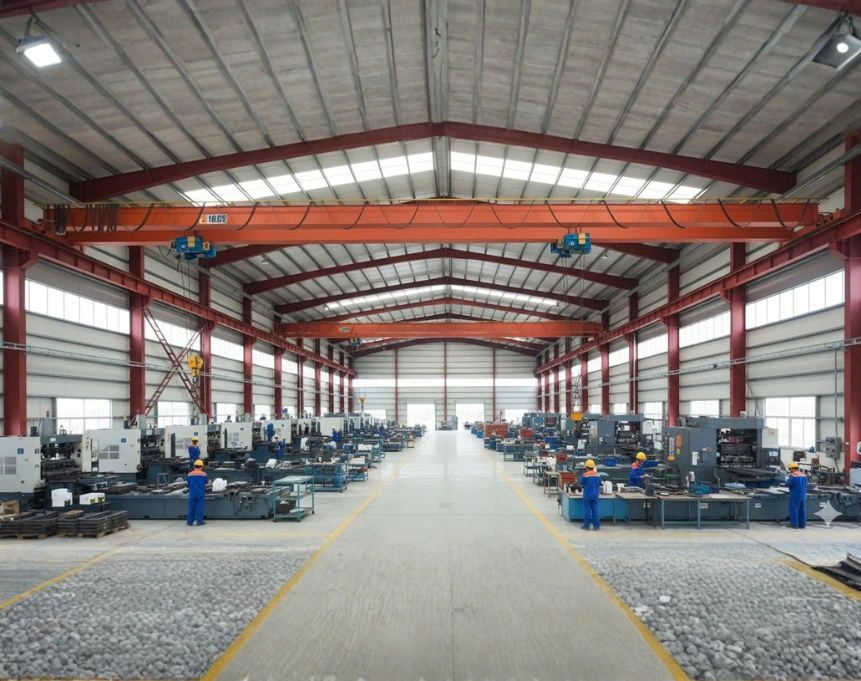
Industrial PEB design begins with your specific operational requirements. Rather than forcing your operations into a predetermined structure, engineers work backward from your processes. Need large column-free spans for unobstructed production flow? Industrial PEB structures deliver clear-span designs spanning 150+ feet without internal columns. Require overhead crane systems? These integrate seamlessly into PEB industrial frameworks. Need specialized zones for different processes? Industrial PEB structures partition easily to create dedicated areas.
Thermal control represents another critical flexibility factor. Food processing facilities, pharmaceutical manufacturers, and chemical plants all demand precise environmental conditions. PEB structures incorporate insulated panels, ventilation systems, and climate control integration that traditional buildings struggle to accommodate economically. Therefore, industrial PEB buildings efficiently provide the environmental stability these sensitive operations require.
Future expandability constitutes another significant flexibility advantage. Manufacturing needs evolve. PEB structures for industrial applications expand relatively simply by adding additional bays. The modular nature of pre-engineered building systems means growth happens without major structural reconstruction. This adaptability protects your investment against future uncertainties.
Additionally, industrial PEB design accommodates aesthetic and functional requirements simultaneously. Modern manufacturing facilities needn't look utilitarian. PEB structures can incorporate architectural elements creating professional, impressive facilities that reflect company brand values.
Structural Strength and Durability: Built for Industrial Demands
Industrial environments demand robustness. Heavy machinery vibrates and stresses structures continuously. Weather conditions can be harsh. Seismic activity poses risks in many regions. PEB structures for industrial applications are engineered to handle these demanding conditions.
The high-strength steel used in industrial PEB structures provides exceptional load-carrying capacity. Moreover, the precise engineering that concentrates materials at stress points optimizes strength-to-weight ratios. Consequently, industrial PEB buildings support overhead cranes, heavy equipment, and dynamic loads that would challenge conventional structures.
Durability testing validates these capabilities. Industrial PEB structures withstand extreme weather—from heavy snow loads in northern regions to high wind pressures in coastal areas. Furthermore, seismic design considerations ensure safety in earthquake-prone zones. This robustness means your industrial facility PEB structure protects your equipment and operations reliably for decades.
Corrosion resistance represents another critical durability factor. Advanced coating systems protect steel components against rust and environmental degradation. Consequently, industrial PEB buildings maintain structural integrity in challenging environments—coastal areas with salt exposure, industrial zones with chemical presence, or humid regions with moisture challenges.
The combination of engineering excellence, superior materials, and protective coatings means pre-engineered industrial structures deliver exceptional durability. Your facility investment remains sound for 30+ years with minimal structural concerns.
Environmental Sustainability: Building Green Industrial Facilities
Modern industrial companies increasingly prioritize environmental responsibility. PEB structures for industrial applications align perfectly with sustainability objectives.
First, consider material efficiency. The optimized steel usage in industrial PEB structures reduces raw material consumption significantly. Additionally, steel's complete recyclability means PEB components can be recovered and reused if facilities relocate or operations evolve. This circular economy approach resonates with environmentally conscious companies.
Second, examine energy performance. Insulated PEB industrial buildings reduce operational energy consumption for climate control. Natural lighting systems minimize artificial lighting needs during daylight hours. Furthermore, the longevity of pre-engineered structures means they don't require premature replacement, avoiding the environmental impact of demolition and reconstruction.
Third, consider construction waste. Factory fabrication of PEB structures generates minimal waste compared to on-site construction. There's no concrete cutting, minimal steel scrap, and controlled material handling. This waste reduction benefits the environment while reducing disposal costs.
Companies seeking LEED certification or other sustainability credentials find industrial PEB structures supportive of these goals. The combination of material efficiency, energy performance, and minimal waste generation creates genuinely sustainable industrial facilities.
Industrial Applications Where PEB Structures Excel
PEB structures for industrial applications excel across diverse sectors. Let's examine specific applications.
Manufacturing Plants and Factories:
The clear-span design of industrial PEB buildings creates obstruction-free production floors. Machinery installation becomes straightforward. Production line modifications accommodate product changes easily. The flexibility of industrial PEB structures supports manufacturing efficiency.
Warehousing and Logistics:
Column-free spaces maximize storage capacity. The durability of industrial PEB buildings handles heavy loads from racking systems and constant material movement. Quick construction timelines of PEB structures enable rapid expansion of distribution networks.

Heavy Equipment Facilities:
Automobile assembly plants, heavy machinery manufacturers, and engineering facilities benefit tremendously from industrial PEB structures. The robust frameworks support overhead cranes and heavy equipment safely.
Cold Storage and Temperature-Controlled Facilities:
Insulated industrial PEB buildings maintain precise temperature control economically. This makes them ideal for pharmaceutical storage, food processing, and chemical facilities requiring environmental control.
Assembly and Processing Plants:
Pharmaceutical, chemical, and food processing facilities find industrial PEB structures accommodate complex equipment layouts while maintaining environmental controls. The flexibility of PEB industrial design adapts to specific process requirements.
Aviation and Transportation Facilities:
Aircraft hangars, maintenance facilities, and transportation hubs benefit from the massive clear spans that industrial PEB structures deliver. The strength of PEB buildings supports specialized equipment like aircraft jacks and heavy-duty maintenance equipment.
Frequently Asked Questions About PEB Structures for Industrial Applications
Q1: How much faster is construction with industrial PEB structures compared to traditional methods?
A: Industrial facilities using PEB structures typically complete in 2-4 months versus 12-18 months for conventional construction. This represents a 70% reduction in construction timeline, enabling businesses to start operations significantly sooner.
Q2: What cost savings can industrial facilities expect from PEB structures?
A: Comprehensive cost savings typically range from 30-40%. These derive from reduced material consumption, minimized labor requirements, faster construction timelines, and lower long-term maintenance expenses. Energy efficiency further reduces operational costs.
Q3: Can PEB structures accommodate heavy machinery and specialized industrial equipment?
A: Absolutely. Industrial PEB structures are engineered to support overhead cranes, heavy machinery, and dynamic loads. The structural design anticipates these demands, and customization ensures your specific equipment needs are met.
Q4: Are industrial PEB structures durable for long-term use?
A: Yes. High-strength steel, advanced coatings, and precision engineering ensure industrial PEB structures provide 30+ years of reliable service. Minimal maintenance requirements further demonstrate their durability.
Q5: Can industrial PEB structures be expanded if operations grow?
A: Certainly. The modular design of industrial PEB structures allows expansion by adding bays or extending frames. This flexibility protects your investment against future growth needs.
Q6: How do PEB structures perform in extreme weather conditions?
A: Industrial PEB buildings are engineered for regional weather challenges. Snow load ratings, wind resistance, and seismic design ensure reliable performance across India's diverse climate zones.
Conclusion
The evidence is compelling. PEB structures for industrial applications represent a superior approach to modern facility construction. They deliver dramatic speed advantages, substantial cost savings, design flexibility, exceptional durability, and environmental responsibility. Whether you operate a manufacturing facility, warehouse, or specialized industrial plant, industrial PEB structures deserve serious consideration.
The industrial companies that thrive in today's competitive environment demand efficiency across all operations. Your facility should work as hard as your team. Pre-engineered building structures ensure your physical infrastructure supports rather than hinders your operational excellence.
If you're planning an industrial facility expansion or new construction project, explore how PEB structures can transform your investment.
Metal Tree specializes in custom industrial PEB solutions tailored to your specific needs. Contact us today to discuss how pre-engineered building technology can accelerate your industrial growth while optimizing your construction investment.