
For decades, conventional construction was the default. It was what everyone knew. But as industries evolve, so do the demands for speed and flexibility. This has paved the way for a modern challenger that is rapidly becoming the champion of industrial infrastructure: the Pre-Engineered Building (PEB). Today, we dive deep into the battle of Pre-engineered warehouse sheds versus conventional sheds to help you decide which method aligns with your industrial goals.
Understanding the Contenders
Before we dissect the differences, let's establish what we are comparing.
Pre-Engineered Warehouse Sheds are structures where the primary components-steel columns, beams, and roofing-are designed and manufactured in a controlled factory environment. These components are cut, drilled, and painted off-site and then shipped to the location for rapid assembly. Think of it as a massive, industrial-grade Lego set designed with precision engineering.
Conventional Sheds, on the other hand, are built from scratch on-site. They typically involve welding steel plates together or using Reinforced Cement Concrete (RCC). Every measurement, cut, and weld happens at the construction site, making the process heavily dependent on local labor availability and weather conditions.
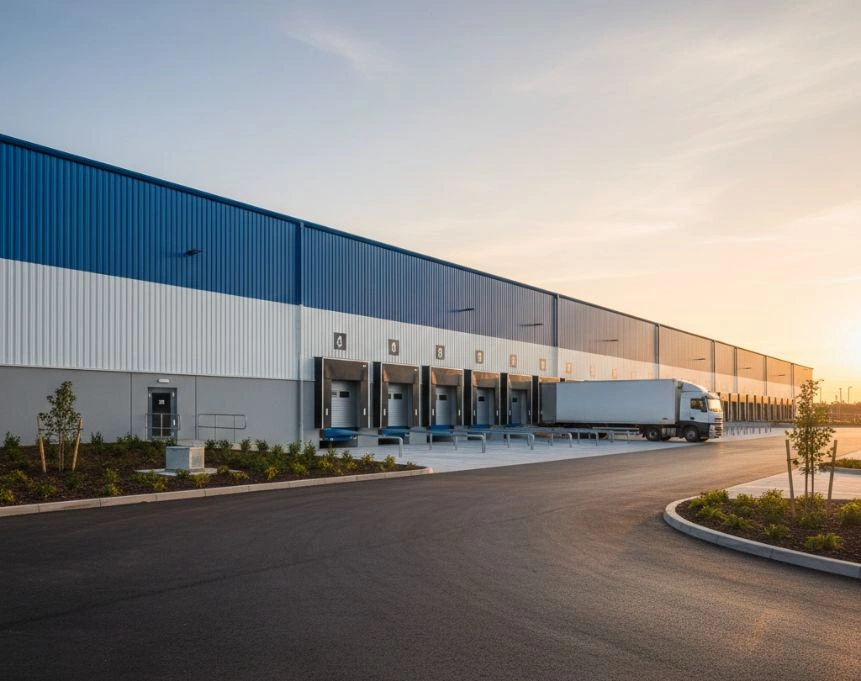
Detailed Comparison: PEB vs. Conventional Construction
To make an informed decision, we need to look beyond just the price tag. Let's compare these two methods across critical dimensions that matter to your business.
1. Construction Timeline
Time is money, especially in logistics and manufacturing. One of the most significant advantages of PEB structures is speed. Because the components are prefabricated in a factory while the foundation is being prepared on-site, the two processes happen simultaneously.
- PEB: Can be completed in about 1/3 to 1/4 of the time required for conventional buildings. A 50,000 sq. ft. warehouse could potentially be up and running in a few months.
- Conventional: A linear process. You can't start the structure until the foundation is cured, and you can't install the roof until the structure is welded. This often leads to projects dragging on for over a year.
2. Total Cost and ROI
While the upfront material cost of steel might seem higher, the overall project cost tells a different story.
- PEB: Offers significant savings in labor and material wastage. Since components are made to exact specifications, there is very little scrap. The faster timeline also means you start generating revenue sooner, boosting your Return on Investment (ROI).
- Conventional: often plagued by cost overruns due to extended labor hours, material wastage on-site, and unpredictable delays.
3. Design Flexibility and Clear Spans
Modern warehousing requires vast, unobstructed spaces for forklifts and racking systems.
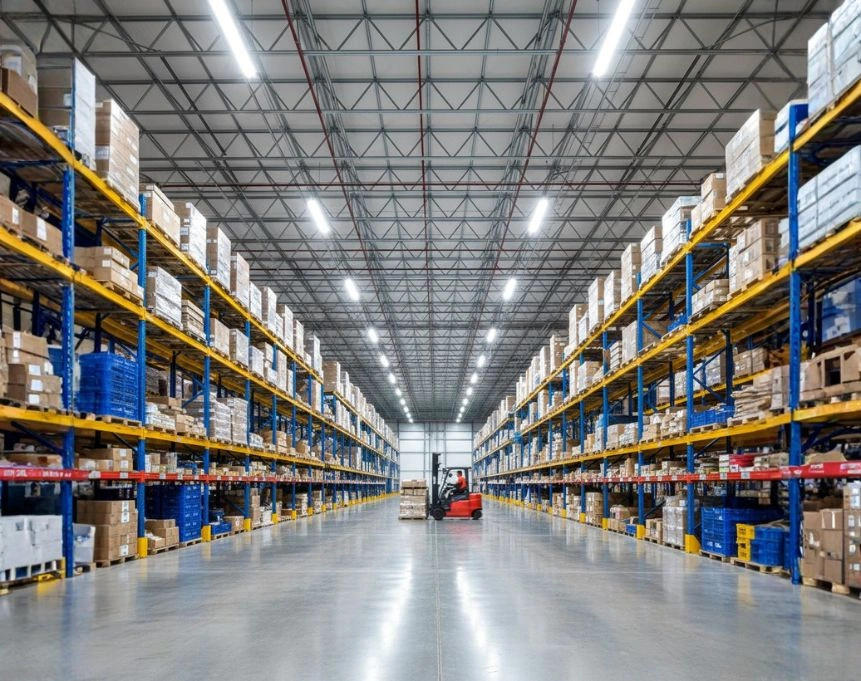
- PEB: Famous for large clear span designs, meaning you can have massive widths without intrusive internal columns. This maximizes usable volume.
- Conventional: Often requires internal support columns to bear the load of the heavy roof, which can obstruct the movement of goods and machinery.
4. Expansion Capability
Business needs change. Can your building change with them?
- PEB: Highly modular. If you need to expand, it is often as simple as unbolting the end wall and adding more bays.
- Conventional: expanding a concrete or site-welded structure is a messy, expensive, and disruptive major construction project.
5. Durability and Weather Resistance
Indian industrial zones face everything from scorching heat to monsoon deluges.
- PEB: Constructed with high-tensile steel and coated with advanced weather-resistant paints. Metal Tree's sheds are designed to withstand corrosion and severe weather conditions effectively.
- Conventional: While concrete is durable, it is prone to cracking over time. Site-welded steel often lacks the high-quality protective coatings applied in factories, leading to faster corrosion.
6. Maintenance Requirements
- PEB: Requires minimal maintenance. The high-quality paint and roofing sheets (often Galvalume) retain their integrity for decades.
- Conventional: Concrete needs regular patching and painting. Site-welded steel joints are rust-prone and require frequent inspection and repainting.
7. Environmental Impact
Sustainability is no longer optional.
- PEB: A greener choice. Steel is 100% recyclable, and the precision manufacturing means significantly less material waste.
- Conventional: Generates substantial construction waste, dust, and noise pollution at the site.
8. Resale and Relocation Value
- PEB: Surprisingly mobile. Since the structure is bolted, it can be dismantled and relocated to a new site if your business moves.
- Conventional: A permanent fixture. You cannot move a concrete building; you can only demolish it.
Comparison: PEB vs. Conventional
| Feature | Pre-Engineered Warehouse Sheds (PEB) | Conventional Sheds (Site-Fabricated) |
| Speed | 🚀 Rapid: 30-50% faster construction | 🐢 Slow: Linear, weather-dependent process |
| Cost | 💰 Cost-Effective: Low labor & waste | 💸 Variable: High labor, frequent overruns |
| Span | 🏗️ Clear Span: Large column-free spaces | 🏛️ Obstructed: Often needs internal columns |
| Quality | ✅ Factory Precision: Consistent quality | ⚠️ Variable: Depends on site welder skill |
| Flexibility | 🧩 High: Easy to expand or modify | 🧱 Low: Difficult and costly to change |
| Eco-Friendly | 🌿 High: Low waste, recyclable | 🗑️ Low: High waste generation |
| Foundation | 📉 Lighter: Requires lighter foundation | 📈 Heavier: Needs massive foundation |
Decision Tree Tool: Which Fits Your Requirements?
Struggling to decide? Follow this simple logic path to see which method aligns with your specific project needs.
1. Is your project timeline critical?
- YES: Go to Question 2.
- NO: Conventional might be an option if you have a local contractor preference.
2. Do you require large, column-free internal spaces for storage?
- YES: Pre-Engineered Warehouse Sheds are your best bet.
- NO: Conventional sheds can work for small, segmented storage.
3. Is future expansion or relocation a possibility?
- YES: PEB is the only practical choice for modular expansion or relocation.
- NO: A permanent conventional structure could suffice.
4. Are you looking to minimize on-site labor and management headaches?
- YES: Choose PEB for its "plug-and-play" assembly style.
- NO: You are comfortable managing a large on-site labor force.
Result: For most modern industrial applications-especially logistics, e-commerce, and manufacturing-the Pre-Engineered Warehouse Shed is the clear winner for efficiency and value.

Industry-Specific Fit
Different industries have different "pain points." Here is how PEB addresses them:
- Logistics & Distribution: Speed is everything. PEBs allow these companies to set up regional hubs in record time to meet delivery promises. The clear span design maximizes racking space.
- E-Commerce Fulfillment: These facilities need to be massive and often automated. The precision of PEB steel structures supports the installation of complex conveyor and sorting systems better than the variances found in manual on-site welding.
- Manufacturing Plants: Manufacturers often need to install heavy overhead cranes. Metal Tree's PEBs can be custom-designed to support crane beams and heavy loads seamlessly.
- Cold Storage: PEBs integrate perfectly with insulated sandwich panels, creating the airtight, thermally efficient envelopes required for cold chains.
Real-World Scenarios
- The E-Commerce Giant: Consider a large retail distribution center in North India. They needed a 100,000 sq. ft. facility to handle the festive season rush. By choosing a PEB solution, the steel structure was erected in just 8 weeks. A conventional approach would have missed the festive deadline entirely, costing millions in lost opportunity.
- The Heavy Engineering Firm: Conversely, a specialized workshop requiring massive concrete bunkers for vibration dampening might opt for a hybrid or conventional lower structure. However, even they often choose a PEB roof system to cover the facility quickly and economically.
Why Choose Metal Tree for Your Warehouse?
At Metal Tree, we don't just build sheds; we engineer business solutions. Based in Greater Noida, we understand the pulse of the Indian industrial sector.
- Custom Engineering: We tailor every beam and column to your load and dimension needs.
- Complete Solutions: From the primary steel frame to the roofing accessories and insulation, we provide a turnkey solution.
- Local Expertise: We know the local soil, wind, and seismic conditions, ensuring your warehouse is safe and compliant.
Conclusion
The verdict is clear. While conventional sheds have served us well in the past, Pre-engineered warehouse sheds are the future of industrial infrastructure. They offer a blend of speed, strength, and savings that traditional methods simply cannot match. In an economy where agility is key, choosing a PEB allows you to build faster, operate sooner, and grow smarter.
Ready to transform your supply chain with a world-class facility? It’s time to stop waiting on concrete to cure and start building with steel.
Frequently Asked Questions (FAQ)
Q1: Are pre-engineered warehouse sheds cheaper than conventional concrete buildings?
A: Yes, in most cases. While steel material costs can be higher, PEBs save significantly on labor, foundation costs (as they are lighter), and construction time. The faster completion also leads to quicker ROI.
Q2: Can I install overhead cranes in a PEB warehouse?
A: Absolutely. PEB structures can be custom-designed to support heavy overhead cranes (EOT cranes) often used in manufacturing and heavy logistics
Q3: How long does a PEB warehouse last?
A: With proper maintenance, a PEB warehouse can last for decades. They use high-tensile steel and advanced coating systems that resist rust and weather damage far better than site-welded structures.
Q4: Is it difficult to expand a PEB warehouse later?
A: No, it is very easy. PEBs are modular. You can easily add more bays to the length of the building by unbolting the end wall and adding new structural frames.
Q5: Are PEB warehouses suitable for cold storage?
A: Yes, they are ideal. The steel structure pairs perfectly with PUF (Polyurethane Foam) insulated sandwich panels to create highly thermally efficient cold storage facilities.