Indian businesses are building faster than ever. A growing manufacturer adding a new shed next to the existing plant, a logistics operator searching for a ready-to-use warehouse near a highway, or an education trust planning extra classrooms all face the same pressure: create safe, modern space quickly without locking up too much capital on day one.
Instead of waiting months for brick-and-mortar construction, more project owners now look at factory-made steel structures that arrive on trucks, are lifted into place with cranes, and are handed over in a fraction of the time. These solutions help reduce site disruption, keep labour under control, and still deliver the kind of finishes clients expect from long-term assets.
If you are shortlisting vendors for your next industrial, commercial, or institutional project, this 2026 guide will give you a clear overview of how prefabricated buildings work and which leading players in India are worth evaluating more closely before you issue a purchase order.
What is a Prefabricated Building?
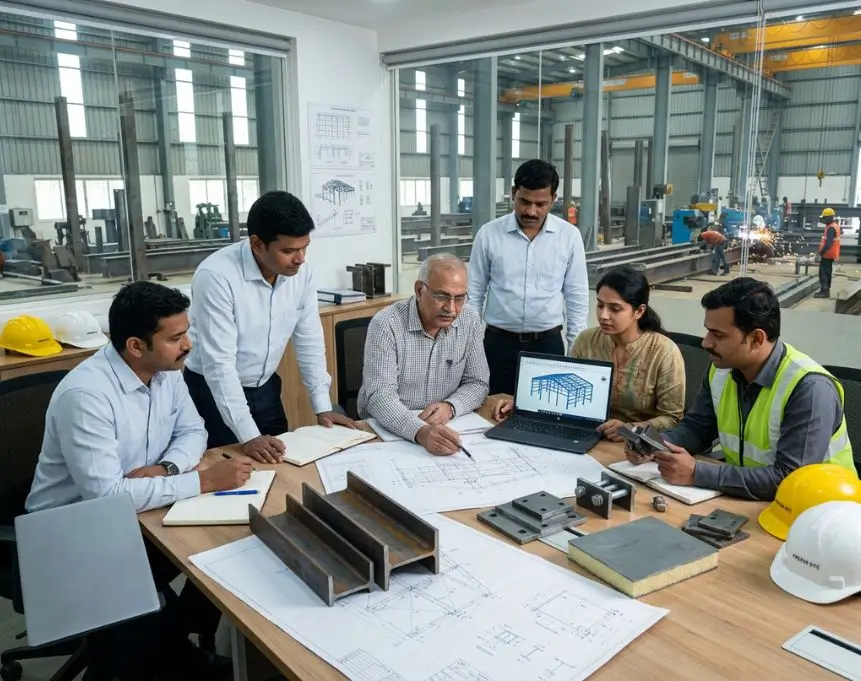
A prefabricated building is a structure whose key components are manufactured in a factory and then transported to the project site for assembly, instead of being built fully at the location in brick, block, and concrete. Columns, beams, wall panels, and roof elements are cut, profiled, and finished in controlled conditions, which improves consistency and reduces on-site uncertainty.
In India, many modern prefabricated projects use cold-formed steel sections combined with insulated sandwich panels, creating buildings that are both light in weight and structurally sound. Fabrication in an indoor environment reduces waste, speeds up project schedules, and makes it easier to coordinate different trades at site.
Compared with conventional masonry-heavy construction, the prefabricated approach shifts a large part of the work into the factory, so site activity is mainly limited to foundations, assembly, and finishing. This division is particularly helpful in congested industrial zones, institutional campuses, and urban plots where space for staging materials and labour is limited.
One more important advantage is flexibility. Because these systems are based on bolted connections and modular components, many structures can be extended, modified, or even dismantled and re-erected at another location, which is especially useful for contractors, infrastructure developers, and organisations working with changing project pipelines.
Key benefits for Indian projects
- Speed of delivery: Off-site manufacturing and parallel site work compress overall schedules significantly compared to conventional buildings.
- Cost control: Shorter timelines, lower labour demand, and less material wastage help optimise life-cycle costs, particularly for industrial and commercial facilities.
- Cleaner sites: With fewer wet trades and limited cutting or welding on the ground, there is less dust, noise, and disturbance to neighbours or ongoing operations.
- Thermal comfort: Insulated panels help maintain more stable indoor temperatures, which improves worker comfort and can reduce energy bills.
- Scalability: Additional bays, mezzanines, or partitions can often be added with far less disruption than in conventional RCC structures.
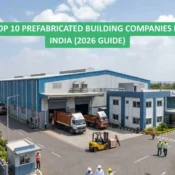
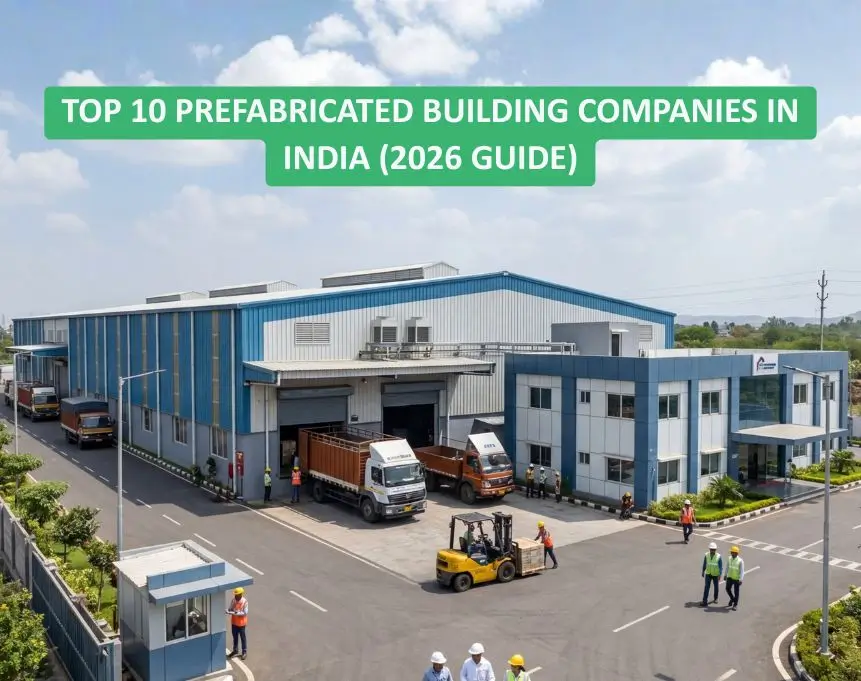
Top 10 Prefabricated Building Companies in India (2026 Guide)
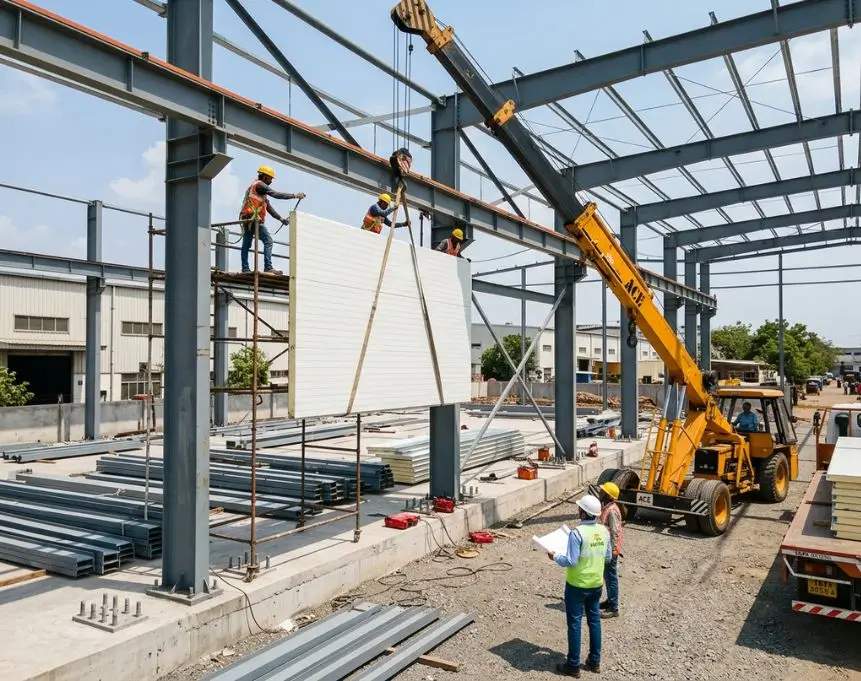
India’s steel building ecosystem now includes long-established giants and nimble specialists offering modular solutions. Industry articles and rankings frequently mention EPACK Prefab, Tata BlueScope Steel, Kirby Building Systems, Interarch Building Products, Everest Industries, Jindal Buildsys, Pennar Industries, Zamil Steel, Kaizen Steel Building Solutions, and similar players among the leading names in the country.
Below is a practical, alphabetically ordered list of 10 notable prefabricated and PEB-focused companies operating in India as of 2026. Treat it as a starting point for comparison; the best partner for you will still depend on project type, location, and service expectations.
1. Kirby Building Systems India
Kirby Building Systems is one of the global pioneers of pre-engineered buildings and maintains a strong presence in India, particularly in large-span industrial and logistics projects.
Its expertise in heavy steel structures, complex geometries, and high-load applications makes it a common choice for big-ticket factories and distribution centres where reliability is critical.
2. Interarch Building Products
Interarch Building Products has decades of experience in pre-engineered buildings and is known for turnkey industrial and commercial steel projects, including warehouses, factories, auditoriums, and railway-related structures. The company typically handles design, fabrication, and erection under one roof, which simplifies coordination for clients managing time-sensitive builds.
3. Everest Industries
Everest Industries leverages its long history in building materials to deliver prefab sheds, portable offices, modular institutional blocks, and pre-engineered steel buildings for a wide range of sectors.
Its strength lies in combining roofing, walling, and board products with steel structures, giving customers integrated envelopes that are engineered to perform well over long service lives.
4. EPACK Prefab
EPACK Prefab, headquartered in the Greater Noida region, has over two decades of experience delivering pre-engineered buildings, industrial sheds, warehouses, and prefab worker and site accommodation across India. The company offers both heavy steel PEB structures and lighter modular buildings, often on a turnkey basis that covers design, fabrication, and installation for large industrial and infrastructure projects.
5. Metal Tree Engineering
Metal Tree Engineering, based in Greater Noida, specialises in design-led pre-engineered and prefabricated solutions for warehouses, factory buildings, multi-storey structures, commercial and institutional spaces, and emergency facilities. The company focuses on optimised structural design, efficient load paths, and practical detailing, often combining PEB main frames with light-gauge steel, insulated panels, and custom interior layouts tailored to Indian operating conditions.
6. Jindal Buildsys
Jindal Buildsys Limited has grown into a prominent steel building manufacturer, offering pre-engineered factories, warehouses, and commercial shells, along with roofing and wall cladding systems.
It is regularly highlighted in industry lists of major PEB manufacturers and is known for serving industrial, commercial, and even residential applications with engineered steel solutions.
7. Kaizen Steel Building Solutions
Kaizen Steel Building Solutions positions itself as an agile turnkey PEB provider, delivering factory sheds, warehouses, and other industrial buildings with a focus on quick delivery and competitive pricing. In many cases, Kaizen’s scope extends from foundation design and steel structures to roofing, cladding, accessories, and installation, which appeals to clients who prefer a single point of responsibility.
8. Pennar Industries
Pennar Industries brings decades of steel fabrication experience to the PEB segment, supplying industrial sheds, warehouses, and commercial buildings engineered for durability and performance. Strong quality control processes in fabrication and an integrated portfolio of profiled sheets and accessories make Pennar a solid option for owners prioritising structural longevity.
9. Tata BlueScope Steel
Tata BlueScope Steel operates a dedicated building solutions division that delivers pre-engineered steel buildings, roofing, and cladding systems across India, backed by advanced coated steel technology.
Its brand strength, product warranties, and extensive channel network make it a natural fit for corporate and institutional clients who want long-term material performance and pan-India support.
10. Zamil Steel Buildings India
Zamil Steel Buildings India forms part of a global steel building group and supplies engineered PEB solutions for factories, warehouses, showrooms, and other commercial buildings in the country. The company often delivers end-to-end packages including structural frames, cladding, accessories, and erection services, following international engineering practices and standardised systems.
How to Choose the Right Prefabricated Building Company
With so many prefabricated building companies in India and related PEB manufacturers in the market, the best partner for you will depend on your project’s function, budget, and growth plans. Instead of looking only at headline square-foot rates, take a structured approach to evaluation.
One helpful step is to decide whether you want a national-level player with multiple plants and large teams, or a focused regional specialist closer to your site. A company located within reasonable distance of the project often offers advantages in logistics, site visits, and post-completion service, while large all-India brands may bring wider capacity and product depth.
Begin by defining your requirement clearly: built-up area, clear heights, crane capacities, mezzanines, fire and insulation needs, and potential future expansion. Companies with strong in-house design teams can convert this brief into an efficient structural concept that avoids overdesign and keeps steel tonnage under control.
Next, check engineering and manufacturing credentials. Look for experienced structural engineers, quality certifications, and modern fabrication lines with automated cutting and drilling rather than only manual fabrication. Independent trade blogs and comparison articles that repeatedly feature certain manufacturers can be a useful signal of consistency.
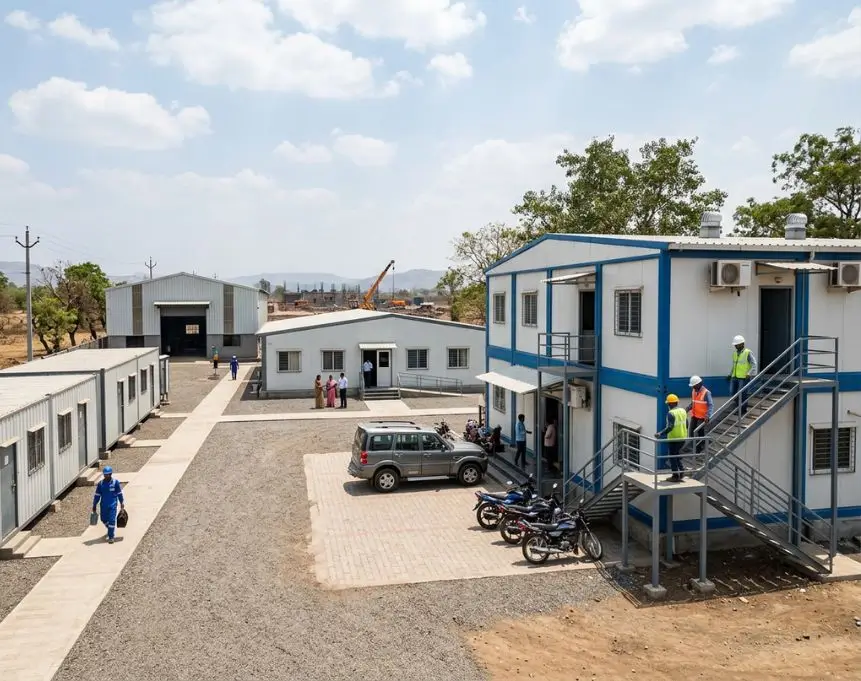
You should also review sector-specific experience. A vendor that mainly builds warehouses may not be ideal for multi-storey institutional blocks, while a firm focused on small porta cabins may lack the capacity for very large industrial sheds. Case studies, reference calls, and, where possible, site visits to similar completed projects will help you validate claims.
Finally, compare complete proposals rather than base prices. Ask for clarity on inclusions such as design, anchor bolts, secondary steel, insulation, doors, windows, skylights, and erection. Costing studies for PEB projects in North India show that the true price per square foot depends heavily on accessories, logistics, and erection complexity, not just the basic steel weight.
A quick internal checklist before finalising a vendor could include: whether the vendor has executed similar projects in your state, how responsive their engineering team is during the proposal stage, whether they are open to optimisation discussions, and how clearly they spell out responsibilities during erection and handover. Taking a little extra time at this stage usually saves weeks of firefighting later on site.
Once you narrow the list to two or three candidates, invest time in technical alignment meetings rather than only negotiating commercials. Walk through loading assumptions, future expansion plans, and detailing expectations so that all parties are quoting on the same structural concept. For complex factories, logistics hubs, or multi-use campuses, it is often worth including a design-driven specialist such as Metal Tree in this final round so that you can compare different engineering approaches side by side and choose the most efficient option for your business.
FAQ
Yes, when engineered to relevant codes and built with quality steel, corrosion protection, and well-designed roofing and wall systems, prefabricated and pre-engineered buildings can deliver decades of reliable service in Indian conditions. Many leading manufacturers highlight durability and long service life in their project portfolios.
Most manufacturers price projects on a case-by-case basis, with rates influenced by built-up area, structural loads, steel tonnage, panel specifications, accessories, and site location. Industry listings and costing documents suggest that lighter sheds sit at the lower end of the range, while heavily loaded or insulated multi-storey structures are costlier per square foot.
“Prefabricated building” is a broad term for any structure whose primary elements are made off-site, including cabins, modular rooms, and panel-based blocks. A “pre-engineered building” usually refers to a steel building where primary and secondary members are optimised as a complete system and fabricated for bolted assembly on site. Many Indian companies supply both under one roof.
In many cases, yes. Because these buildings rely on bolted connections and modular components, they can often be extended, reconfigured internally, or dismantled and reassembled elsewhere, subject to engineering checks and the condition of the components. This flexibility is a major reason they are popular for industrial, infrastructure, and temporary facilities.
Industrial sheds, warehouses, logistics hubs, labour camps, institutional classrooms, commercial shells, and rapid-deployment emergency facilities are among the most common use cases for prefabricated construction. For these projects, the combination of speed, cost control, and flexibility often delivers a stronger business case than conventional construction methods.
Choosing the right partner today will shape how safely and efficiently your facility operates for many years ahead.