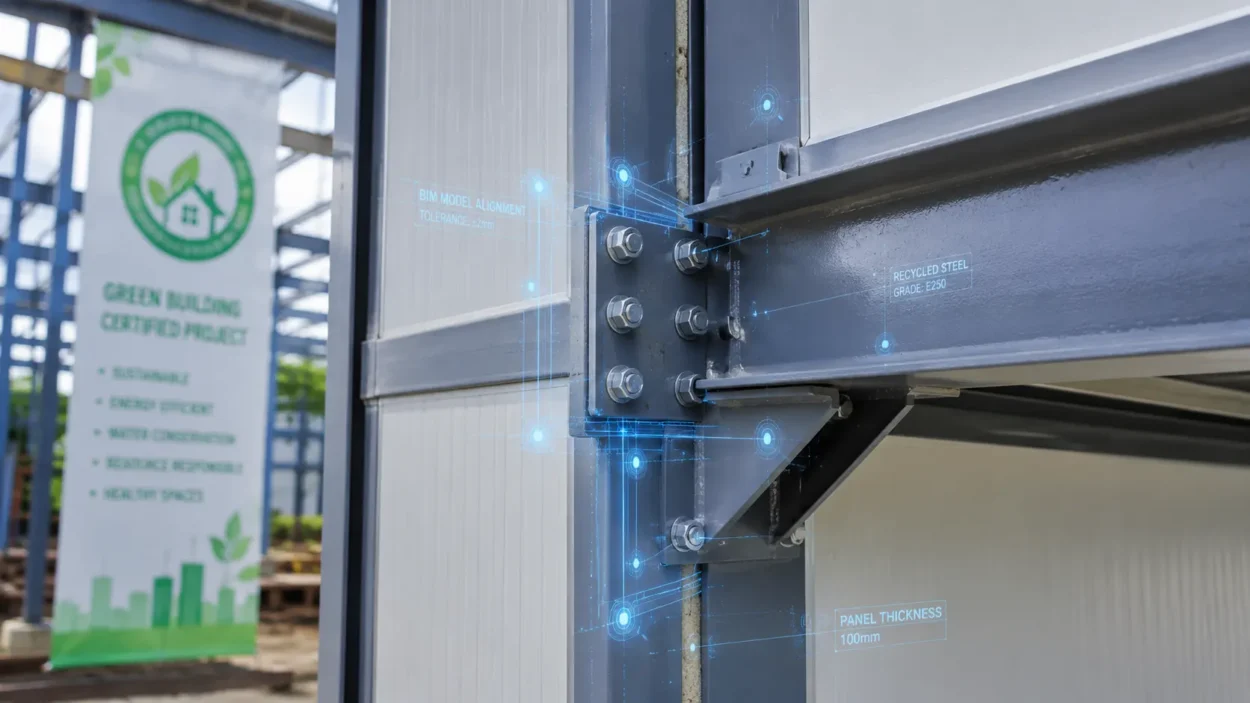
Why Indian businesses are rethinking construction
Across the country, a typical manufacturing company or logistics firm planning a new facility faces familiar headaches: long project timelines, labour uncertainty, and frequent cost overruns as raw material prices fluctuate. Rising expectations around speed of execution, ESG goals, and quality control make these issues even more painful for promoters, project managers, and investors.
At the same time, India’s infrastructure and housing push under schemes like the National Infrastructure Pipeline and affordable housing programmes demands structures that can be rolled out quickly at scale, without compromising on safety or durability. Consequently, more decision-makers are shifting away from fully on-site construction towards factory-made components and systems that simply assemble on site like a kit of parts.
What are prefabricated buildings in India?
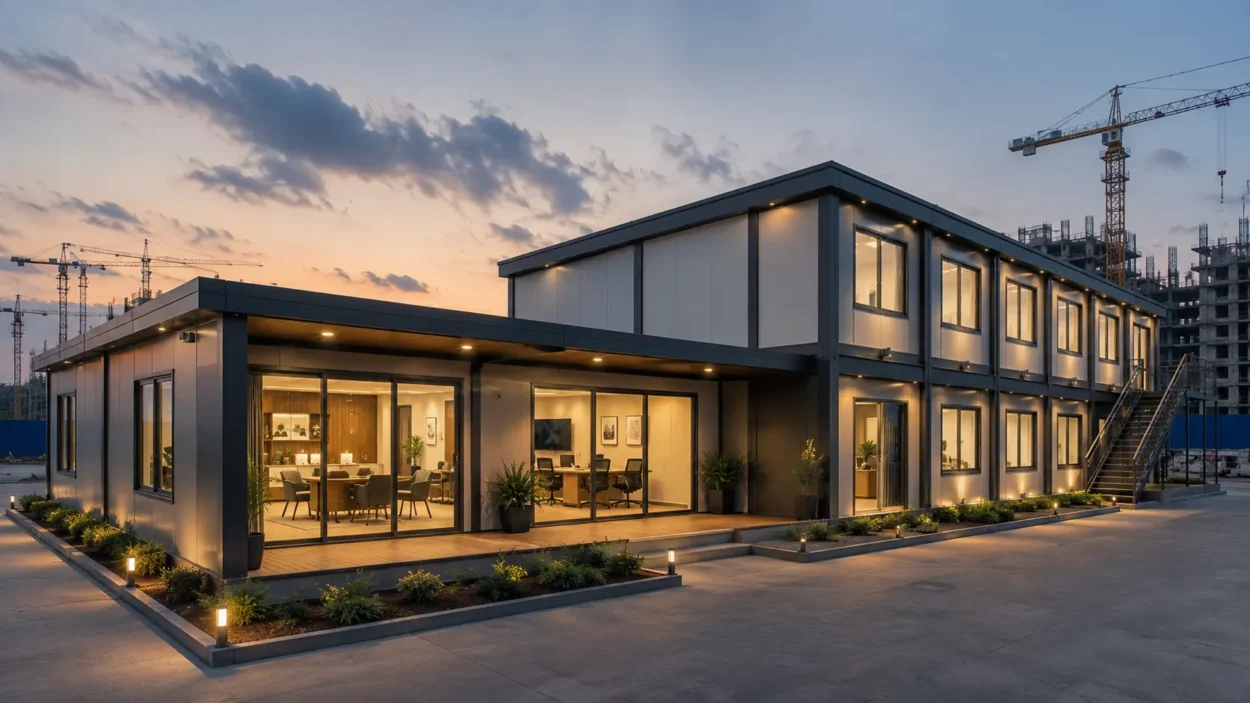
In simple terms, a prefabricated building is a structure whose primary components are manufactured in a controlled factory environment and then transported to site for rapid assembly. In India, these typically use cold-formed steel or structural steel frames combined with insulated sandwich panels or precast elements for roofs, walls, and partitions, creating lightweight but strong envelopes.
Because most fabrication happens off-site, prefabricated buildings achieve more consistent quality, reduce material wastage, and significantly shorten project duration compared to conventional RCC and brick construction. They also lend themselves naturally to modular layouts, making future expansion, relocation, or reconfiguration much easier than with traditional structures.
Key components of prefabricated buildings
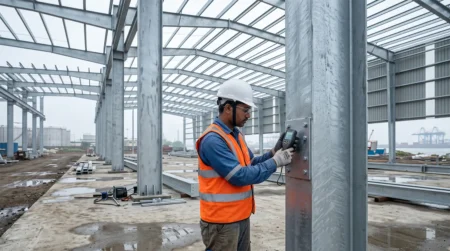
- Structural framework: Cold-formed steel framing systems or pre-engineered steel structures form the main skeleton, offering high strength-to-weight ratios and seismic resistance.
- Envelopes and panels: Insulated sandwich panels with PU, PIR or EPS cores deliver thermal and acoustic performance for roofs and walls, improving comfort and energy efficiency.
- Floors and partitions: Light-gauge framing, steel deck systems, and panelised partitions help create flexible interior layouts for offices, worker housing, or commercial spaces.
- Services integration: Electrical conduits, plumbing lines, HVAC ducts, and data cabling can be coordinated into the design early, reducing clashes and rework on site.
Applications of prefabricated buildings in India
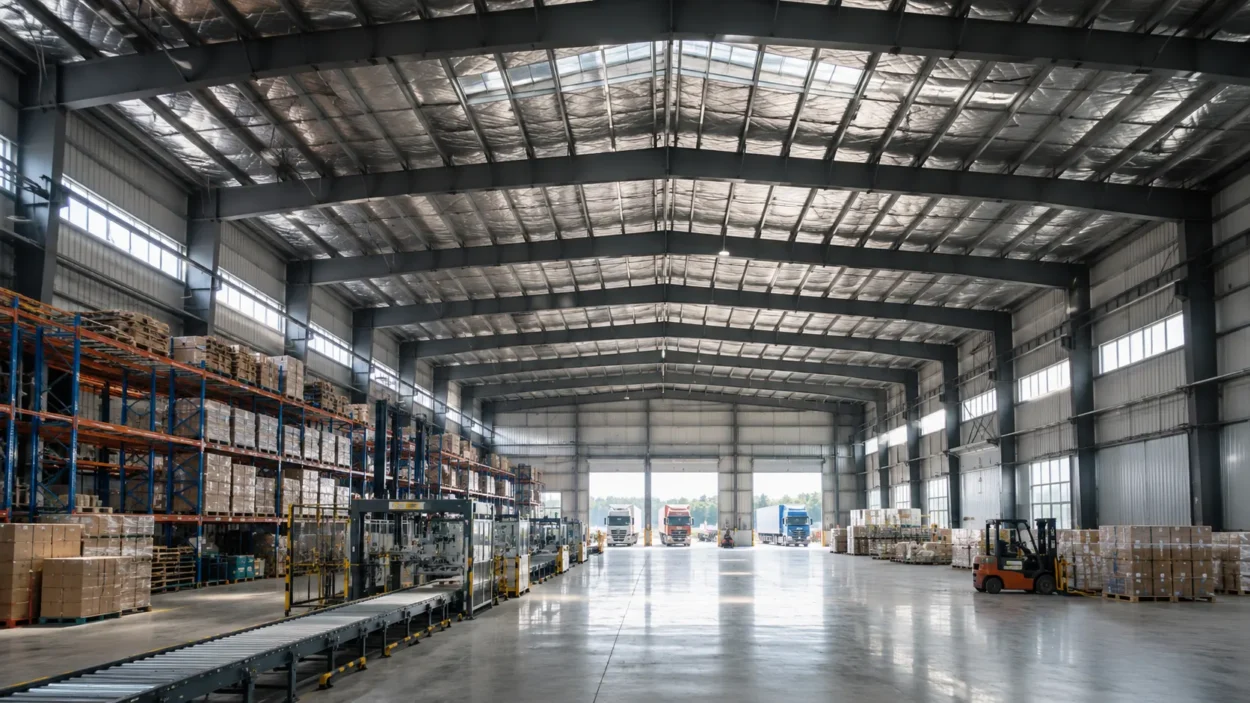
Prefabricated buildings in India now span almost every major sector, from industrial plants to public institutions and emergency infrastructure. While early adoption focused on temporary housing and site offices, 2026 is seeing much deeper penetration into core business infrastructure.
Industrial and warehousing
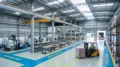
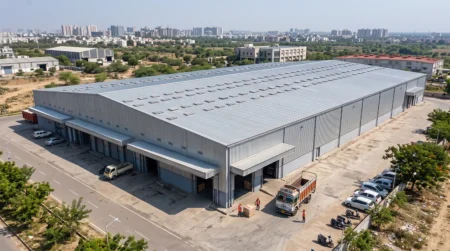
Industrial sheds, PEB factory buildings, and warehouses are among the most widespread applications because speed and clear spans are critical in these projects. Pre-engineered steel buildings can deliver large column-free spaces suitable for production lines, racking, and material handling systems, while still allowing future bay extensions or mezzanine additions.
India’s warehousing and logistics boom, driven by e-commerce, manufacturing, and cold chain expansion, is heavily reliant on such systems to meet tight commissioning deadlines. For many developers, prefabricated warehouses offer an attractive combination of faster rental income, lower life-cycle costs, and easier relocation or repurposing if business needs change.
Commercial and institutional spaces
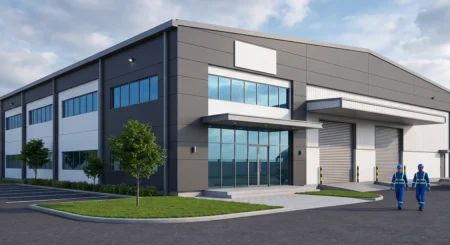
Prefabricated commercial buildings are increasingly used for offices, showrooms, healthcare facilities, and educational institutions where flexible layouts and clean construction are valued. Because much of the work is done off-site, disruption to ongoing operations—especially on cramped urban plots—is significantly reduced compared to conventional construction.
For schools, training centres, and government facilities, prefabricated institutional buildings enable quick capacity expansion to serve growing populations without waiting years for traditional projects to complete. At the same time, consistent factory quality supports better safety, fire performance, and energy efficiency standards in these socially critical assets.
Housing, labour accommodation, and resorts
Prefabricated labour accommodation, worker hostels, and staff quarters help industrial projects and infrastructure sites house people quickly in safe, thermally comfortable structures. Modular room layouts can be scaled up for student housing or mid-income housing, with shared kitchens and sanitation blocks integrated into the design.
On the lifestyle side, resort cottages, farmhouses, and holiday homes built using prefabricated systems are growing in popularity because they can be installed quickly on challenging or remote plots with minimal disturbance. Since modules can be fabricated and finished in factories, resort developers can standardise room types and upgrade finishes over time while keeping the structural system intact.
Portable and emergency buildings
Portable buildings such as site offices, marketing offices, ticket booths, canteens, and toilet blocks are a natural fit for prefabricated construction due to their temporary or semi-permanent nature. These units can be transported, craned into place, and moved to new sites when projects shift, making them highly economical for EPC contractors and event organisers.
In emergencies—such as disaster relief, temporary clinics, or quarantine centres—rapid-deployment prefab units provide shelter and healthcare infrastructure far faster than traditional methods, often within days. Lightweight, insulated panels and cold-formed steel frames ensure these facilities stay usable for years if required, yet can be dismantled or repurposed once the immediate need passes.
Cost of prefabricated buildings in India
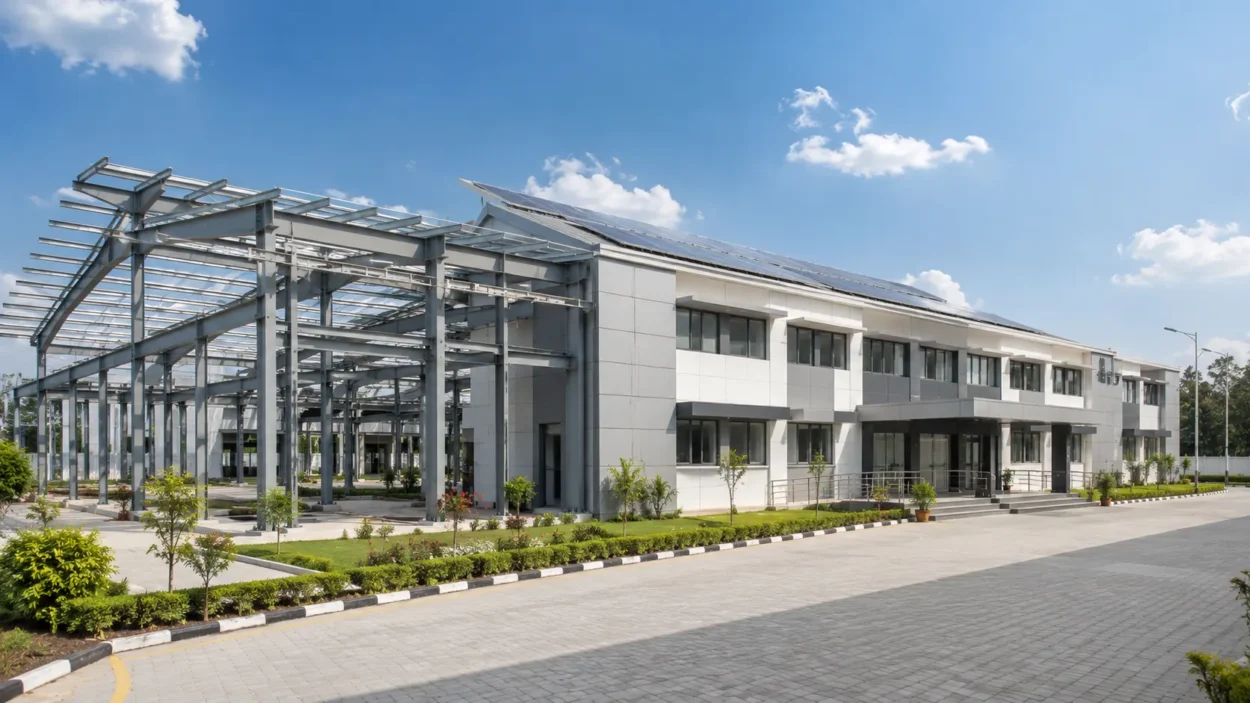
How prefab compares with conventional per sq ft costs
For conventional brick-and-concrete construction in India, broad estimates for houses and small buildings in 2025 range roughly from ₹1,500–₹2,000 per sq ft at the basic end, rising to around ₹1,800–₹2,800 per sq ft for mid-range and even higher for premium finishes, depending on location and specifications. Prefabricated building costs vary widely by system (steel, precast, light-gauge framing) and finish level, but they often compete with or undercut mid-range conventional construction on a full project basis when speed and financing are considered.
For example, Indian prefab home providers report typical turnkey cottages and pods starting from about ₹8–10 lakh for compact units and going upwards for larger, more premium configurations. While these figures are not directly comparable on a strict per sq ft basis—because layouts, land, and servicing differ—they illustrate that high-quality, factory-built structures are no longer a niche, ultra-premium option.
Where the real savings come from
Direct material rates for steel and insulated panels are influenced by commodity cycles, so prefabricated buildings are not automatically cheaper on material alone. However, they deliver savings across the project lifecycle in areas such as:
- Time and financing: Shorter build cycles mean earlier commissioning, rental income, or production start, which reduces interest during construction and improves project IRR.
- Labour and site overheads: Factory fabrication reduces the number of workers required on site, along with costs for accommodation, site facilities, and supervision over long durations.
- Waste and rework: Controlled factory processes and repetitive detailing significantly cut material waste and on-site errors, improving cost predictability.
- Expansion and relocation: Modular buildings can be expanded, reconfigured, or in some cases relocated, turning what would have been sunk civil costs into assets that can move with the business.
Industry analyses of prefabricated and modular construction in India suggest that developers are targeting 5–10% schedule savings and notable reductions in labour costs and waste versus conventional builds, especially on multi-unit projects. When combined with energy savings from insulated envelopes and better detailing, life
2026 market outlook for prefabricated buildings in India
Market size and growth trajectory
According to IMARC Group, the Indian prefabricated buildings market reached around USD 8.8 billion in 2025 and is projected to grow at an annual rate of about 6.84% between 2026 and 2034, reaching approximately USD 15.9 billion. Other research houses estimate the broader prefabricated building and systems market could reach the mid-teens to mid-thirties billions of dollars by 2030, reflecting robust adoption across residential, commercial, and industrial segments.
Parallel data on modular construction in India shows revenue of roughly USD 3.9 billion in 2025 with a forecast CAGR of about 9.9% between 2026 and 2033, indicating even faster growth in more advanced modular and volumetric solutions. Taken together, these figures make it clear that prefabricated buildings are moving from niche to mainstream within India’s overall construction ecosystem.
Drivers: infrastructure, housing, and green mandates
India’s infrastructure and housing programmes—such as PMAY affordable housing, smart cities, and the National Infrastructure Pipeline—are key demand drivers for prefabricated buildings, because large-scale public projects need speed, replicability, and cost control. At the same time, rapid urbanisation and persistent housing shortages are pushing both government agencies and private developers to explore off-site construction to keep up with demand.
Sustainability considerations are also central: developers are increasingly using energy-efficient materials like insulated panels, recycled steel, and precast concrete to reduce operational and embodied carbon, aided by Indian green building rating systems such as IGBC and GRIHA. Prefabricated and modular systems align well with this shift because they minimise waste, enable tight building envelopes, and simplify future upgrades or retrofits.
Technology and process trends for 2026
Emerging technologies such as Building Information Modelling (BIM), automation, and robotics are being integrated into prefabricated construction workflows to enhance precision, coordination, and production speed. Digital design-to-fabrication pipelines allow manufacturers to standardise components while still offering customised layouts, improving both quality control and client experience.
Analysts note that in 2026, prefabricated construction is increasingly being viewed as the backbone of India’s infrastructure growth, especially for warehouses, data centres, and industrial parks that demand scalable, expandable shells. As more projects prove that these structures perform well under Indian climatic conditions and regulatory frameworks, confidence among financiers, insurers, and end-users is expected to grow further.
How Metal Tree fits into the prefabricated buildings landscape
Metal Tree Engineering, based in the Greater Noida region, focuses on innovative, efficient, and sustainable design solutions for pre-engineered and prefabricated buildings tailored to Indian conditions. The company emphasises high structural performance, optimised layouts, and envelope systems that balance thermal comfort with durability, aligning with modern expectations around quality and energy efficiency.
Beyond core industrial and commercial buildings, Metal Tree also delivers prefabricated portable buildings such as portacabins, marketing offices, canteens, toilet blocks, and rooftop structures for businesses across India. By designing these units for quick deployment, easy mobility, and customisable interiors, the company helps clients solve practical space challenges on fast-moving projects and constrained sites.
How to choose a prefabricated building solution in India
Step 1: Define your use case and lifespan
Start by clarifying whether your need is temporary, semi-permanent, or permanent, and whether relocation or future expansion is likely. Portable cabins for site offices or events demand different design priorities than long-term warehouses, multistorey buildings, or institutional facilities. Being explicit about lifespan and flexibility requirements helps your prefabricated building partner optimise structural design, materials, and budgets from day one.
Step 2: Prioritise performance, not just upfront price
While per sq ft rates matter, they should not be the only comparison metric. Consider thermal performance, acoustic comfort, fire ratings, corrosion protection, and maintenance requirements over the entire lifecycle of the building. Often, a slightly higher upfront investment in better envelopes and detailing yields lower energy bills, reduced downtime, and better occupant satisfaction over time.
Step 3: Evaluate design and engineering capability
A strong design and engineering backbone is essential in prefabricated construction, since most decisions are locked in while components are manufactured off-site. Look for partners who use robust engineering practices, follow relevant Indian standards, and can provide detailed layout options, 3D models, and clear technical documentation before fabrication begins. This is particularly important for complex industrial facilities, multistorey buildings, and infrastructure projects with strict compliance requirements.
Step 4: Check factory capacity and quality systems
Inspect or evaluate the manufacturer’s factory facilities, production capacity, quality control processes, and logistics capabilities. Consistent weld quality, coating systems, panel manufacturing, and packing practices directly impact on-site assembly speed and long-term performance. Additionally, assess how the supplier manages steel and panel procurement in volatile commodity markets, as this often determines price stability and schedule reliability.
Step 5: Plan for installation, services, and future changes
Finally, work closely with your prefabricated building provider to coordinate foundations, utilities, and access routes so that installation can proceed smoothly. Discuss provisions for future expansion, internal reconfiguration, or relocation upfront, so that structural systems and connections are designed to accommodate these changes cost-effectively. Clear planning at this stage helps you realise the full flexibility benefits that prefabricated buildings in India can offer over their lifespan.
FAQs on prefabricated buildings in India
Yes, when engineered correctly, prefabricated buildings using steel frames and quality insulated panels can perform reliably for decades in Indian temperature ranges, humidity, and wind conditions. Manufacturers often design these systems to meet or exceed relevant Indian and international codes for structural safety, corrosion resistance, and fire performance, including in coastal or high-rainfall regions.
Costs vary based on size, location, finishes, and whether the structure is a simple shed, a finished office, or a fully serviced building. As a broad indication, conventional construction often ranges from roughly ₹1,500–₹2,800 per sq ft for typical homes and small buildings, while prefabricated solutions can compete with mid-range conventional costs when you factor in faster completion, reduced labour, and earlier revenue or use. For small prefab homes and cottages, turnkey packages in India can start from about ₹8–10 lakh and rise with size and specifications.
Because structural members and panels are manufactured off-site in parallel with foundation and site work, prefabricated projects can often be completed significantly faster than conventional builds. Studies on modular and prefab construction in India indicate potential schedule reductions in the range of 5–10% or more, especially for repetitive units and standardised layouts. For portable cabins, marketing offices, or emergency units, installation can sometimes be completed in days once the base and services are ready.
Modern prefabricated systems are highly customisable in terms of layout, façade treatment, interior finishes, and service integration. Within an engineered structural framework, you can vary colours, claddings, glazing, partitions, and ceiling systems to match your brand, comfort requirements, or local architectural context. At the same time, manufacturers standardise key components and connections behind the scenes to keep costs under control and maintain quality in mass production.
Yes, many developers and institutions now use prefabricated and pre-engineered systems for long-term assets like warehouses, schools, healthcare centres, and office blocks in India, not just for temporary cabins. Market studies show that modular and prefab solutions are gaining share in both permanent and relocatable segments, driven by urbanisation, housing demand, and the need for quick, scalable social infrastructure. When combined with proper design, good-quality materials, and periodic maintenance, these buildings can deliver long service lives while remaining flexible for future changes.