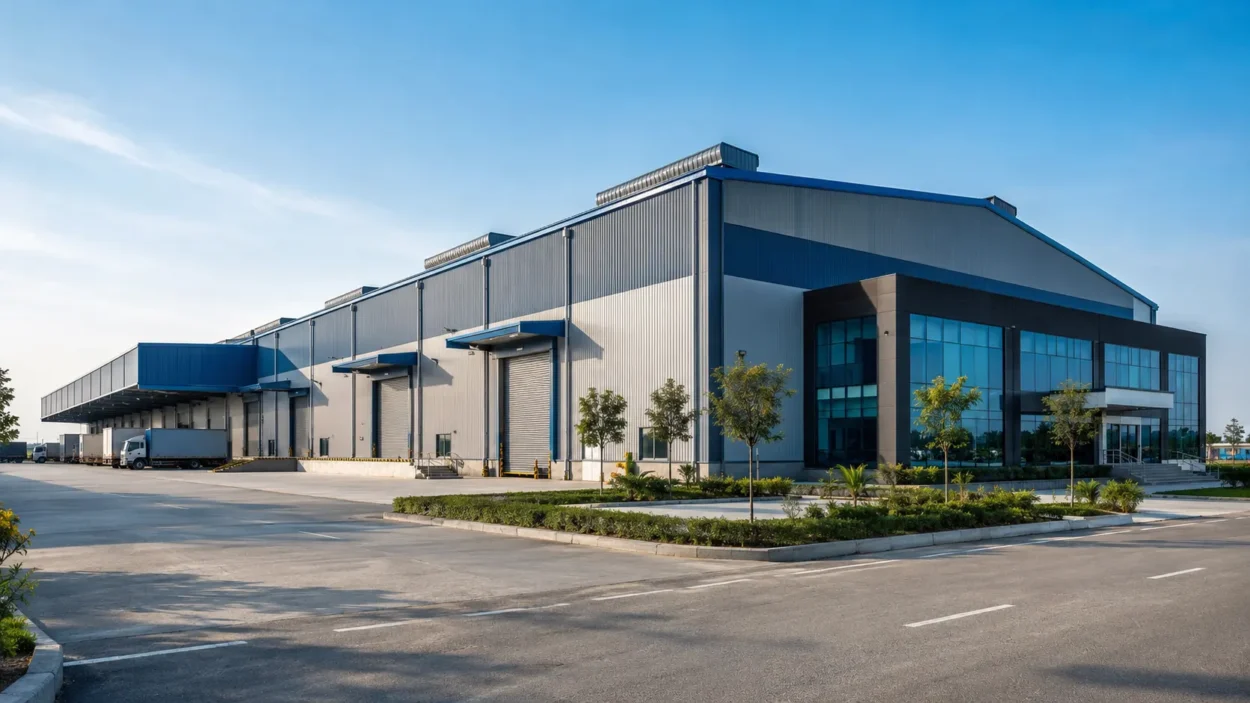
Pre Engineered Factory Buildings: How They Are Transforming Indian Manufacturing
Indian manufacturing is in the middle of a massive capacity expansion wave, from small auto component clusters in Haryana to large food-processing plants in Maharashtra and fast-growing engineering hubs across Tamil Nadu and Gujarat. Yet many projects still get delayed for months because of slow civil construction, unpredictable costs, and coordination issues between multiple contractors. In a market where time-to-production and working capital efficiency can decide who wins an order, factory owners are actively searching for smarter ways to build.
From brick-and-mortar to modern steel factories
For decades, most industrial sheds and plants in India were built using conventional RCC structures, brick walls, and on-site fabrication. While familiar, this approach often meant long project timelines, labour-heavy execution, and frequent rework when drawings and site realities did not match perfectly. As input costs rise and land near industrial belts becomes more expensive, this traditional model is struggling to keep up with modern manufacturing needs.
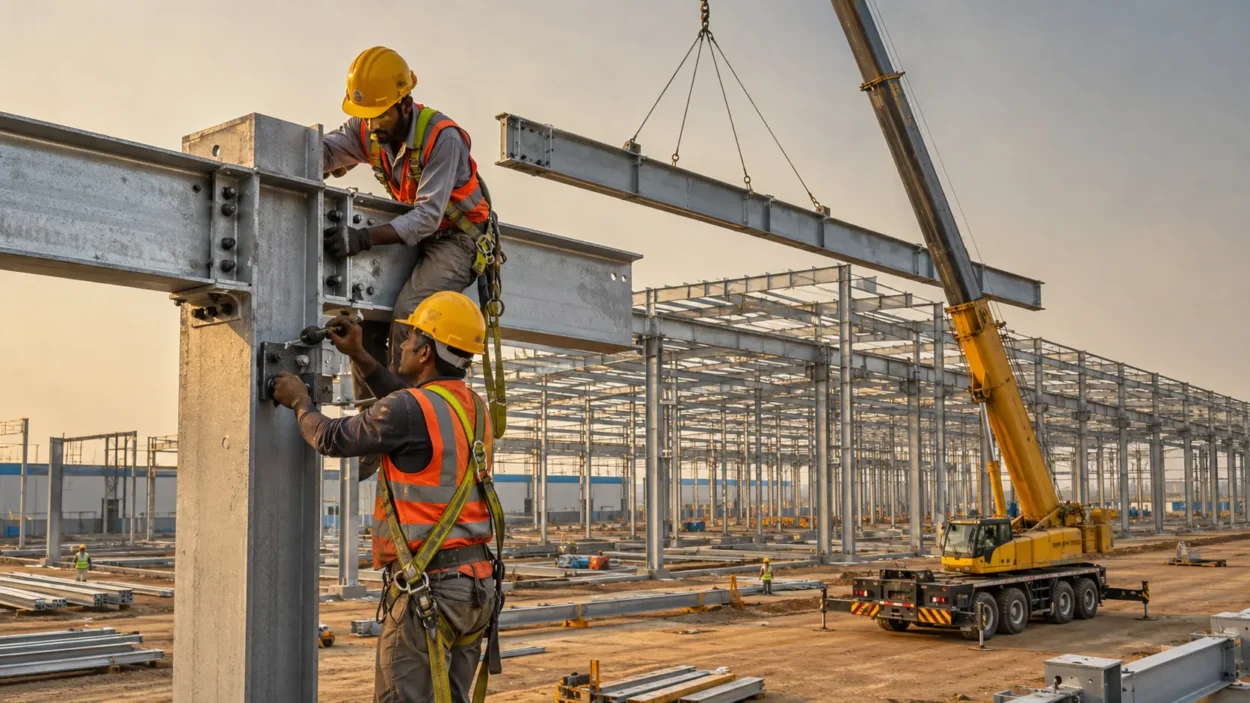
By shifting to pre engineered factory buildings based on steel structures, Indian manufacturers are now able to plan, design, and execute industrial facilities far more efficiently. These systems allow structural components to be designed in software, manufactured in controlled factory conditions, and then transported to site for rapid assembly. As a result, projects see cleaner sites, faster completion, and far better control over quality and performance compared to fragmented civil construction.
Why pre engineered factory buildings suit Indian manufacturers
1. Faster go-live, quicker revenue
Speed is one of the biggest reasons Indian companies are adopting pre engineered factory buildings for new plants and capacity expansions. Because most structural members, roof systems, and wall components are manufactured off-site, site work and fabrication can run in parallel instead of waiting for each stage to finish.
This parallel workflow dramatically compresses project schedules and helps plants go live much sooner than with conventional methods. For a mid-sized manufacturing company, even a three to six month reduction in project time can mean meaningful savings in rent, interest, and lost orders, which translates directly into healthier cash flow.
2. Better cost visibility and control
Traditional projects often start with optimistic budgets and end with cost overruns due to material wastage, contractor delays, and design changes on site. In contrast, pre engineered factory buildings are designed upfront in detail, with clear quantities, steel tonnage, and cladding areas defined in drawings and BOQs.
Because most of the fabrication is done in a controlled factory environment, wastage is lower, labour productivity is higher, and quality is more consistent. As a result, the overall cost per square foot can be highly competitive compared to conventional construction, especially when you factor in faster go-live, lower maintenance, and better long-term performance.
3. High strength, long life, and safety
Industrial sites in India face heavy live loads from machinery, dynamic loads from cranes and material movement, and environmental stress from heat, dust, wind, and in some regions, seismic activity. Pre engineered factory buildings are typically made from high-strength steel sections, designed to perform reliably under these demanding conditions.
Engineered connections, bracing systems, and carefully designed load paths help improve structural stability and safety of the factory building. In addition, because the design is done using modern analysis software and checked against relevant codes, the risk of under-designed elements or unsafe improvisation on site is greatly reduced.
4. Energy-efficient and climate-ready facilities
Energy costs form a major part of operating expenses for many Indian factories, especially in sectors that run HVAC systems, cold rooms, or process equipment around the clock. Pre engineered factory buildings can integrate insulated roof and wall panels, thermal breaks, and ridge ventilators to lower heat gain and enable better temperature control.
By incorporating skylights, polycarbonate sheets, and well-planned window openings, these buildings can maximise natural daylight, reducing dependence on artificial lighting during daytime shifts. Over time, the combination of better insulation, reduced heat ingress, and improved ventilation can significantly cut power bills and create more comfortable, productive working environments.
5. Flexible layouts for modern production
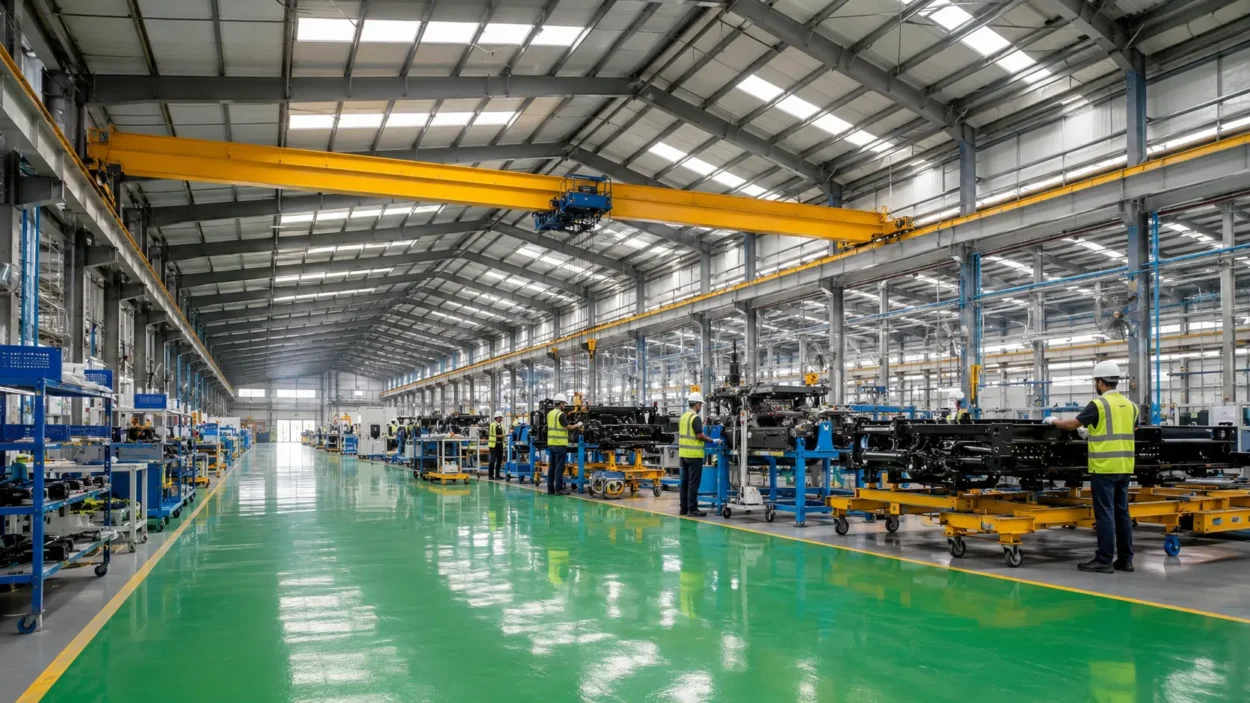
Manufacturing is changing quickly. Assembly lines get reconfigured, new machines are added, and material flow is continuously optimised for efficiency. Here, pre engineered factory buildings offer a major advantage: they are inherently modular and column spacing, bay widths, and clear heights can be planned to suit your operations from day one. Long clear spans help minimise internal obstructions, allowing smoother movement of forklifts, EOT cranes, and workers across the shop floor. As your business grows, it is much easier to extend a pre engineered factory building in length or width, or add mezzanine floors for offices, storage, or light assembly, without major disruption.
How these buildings reshape project delivery
Integrated design-to-delivery approach
With conventional construction, factory owners typically deal with multiple teams: an architect, a civil contractor, a steel fabricator, and separate vendors for roofing, cladding, and interiors. Coordination issues between them often lead to delays, design conflicts, and site-level disputes that slow down production readiness.
A well-managed pre engineered factory building project usually follows a more integrated design-to-delivery approach, led by a single specialist partner. This not only simplifies communication but also ensures that every component—from primary frames and secondary members to roof sheets and accessories—fits together as planned, which reduces risk for the project owner.
Standardisation with customisation
Another key shift is the balance between standardisation and customisation. Pre engineered factory buildings rely on proven design modules, standard connection details, and optimised member sections to keep projects efficient and repeatable. At the same time, the layout, clear height, crane beams, mezzanines, and envelope systems can all be customised to match a specific process and equipment set.
This approach helps manufacturers avoid the high cost of fully bespoke structural solutions, without forcing them into a one-size-fits-all box. Consequently, more Indian SMEs can invest in high-quality industrial infrastructure that feels tailored to their operations while still benefiting from the speed and cost advantages of standardised engineering.
Impact on different manufacturing segments
Automotive and engineering clusters
In automotive and engineering belts from NCR to Pune and Chennai, demand volatility and just-in-time supply models require suppliers to ramp up capacity quickly when new platforms or models are launched. Pre engineered factory buildings enable Tier-1 and Tier-2 suppliers to commission new sheds fast, integrate cranes for heavy components, and plan lean material flows with minimal structural hindrance.
Because these buildings can be expanded in phases, they suit businesses that start with a core line and then add machining, painting, or assembly bays over time. This phased expansion model reduces upfront capital pressure while keeping room for future growth built into the master plan, which is critical for component manufacturers working with tight margins.
Food processing, FMCG, and cold-chain
Food processing units, beverage plants, and FMCG facilities need strict hygiene, controlled environments, and efficient logistics from raw material intake to dispatch. Pre engineered factory buildings can combine insulated sandwich panels, easy-to-clean surfaces, and well-ventilated layouts to meet these requirements while remaining cost-effective.
They also integrate well with cold storage units, loading docks, and temperature-controlled zones, supporting uninterrupted cold chains from production to distribution. For many brands investing in pan-India networks, this ability to create hygienic, thermally efficient spaces quickly is a strong competitive edge.
Warehousing, logistics, and e-commerce
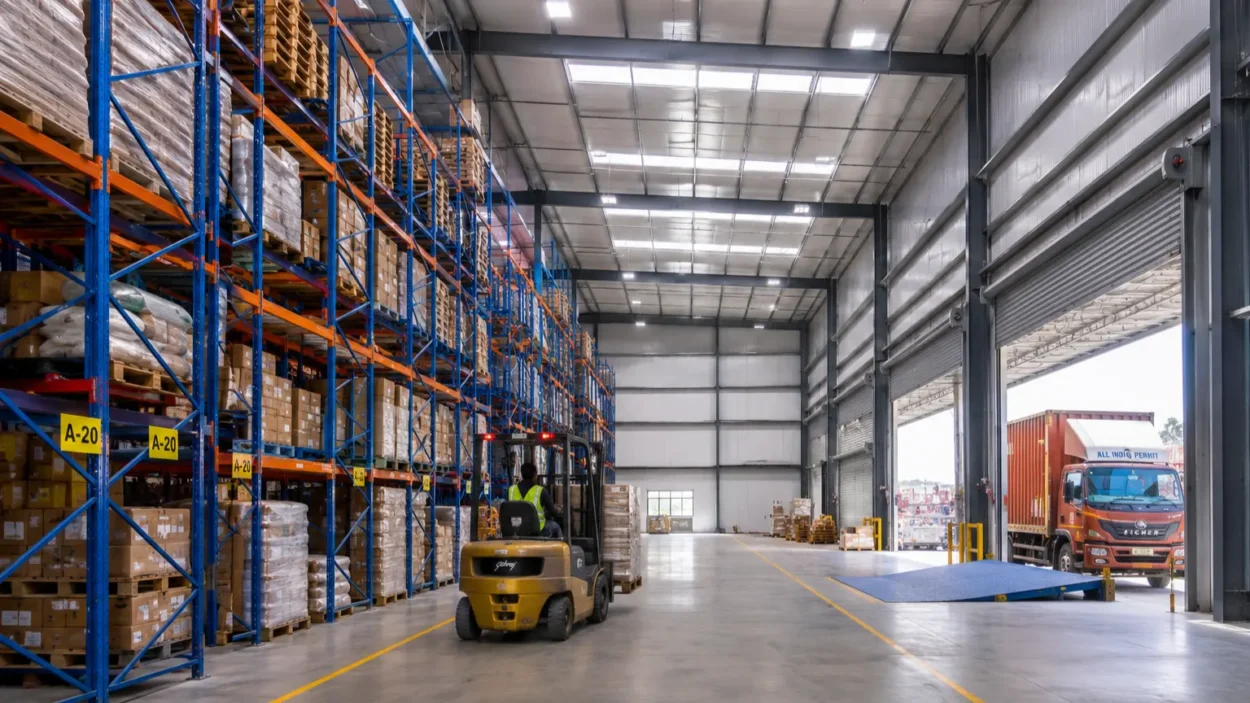
The rapid rise of e-commerce and organised logistics has triggered massive demand for grade-A warehouses and distribution centres across India. Many of these facilities are created using pre engineered factory buildings because they offer long clear spans, tall eave heights, and the ability to handle high pallet racking systems safely.
Additionally, these buildings can be equipped with dock levellers, canopies, and large shutter openings to support high vehicle throughput and quick loading cycles. As supply chains digitise and inventories become more dynamic, the structural flexibility of such facilities becomes a strong enabler for better service levels.
Sustainability and compliance advantages
Beyond speed and cost, sustainability is becoming a serious consideration in industrial project decisions. Steel-intensive pre engineered factory buildings support green goals in multiple ways, since steel is recyclable and site waste is lower compared to conventional construction. Better thermal performance from insulated panels and thoughtful detailing also translates into lower energy consumption over the building’s life cycle.
Moreover, because design and detailing are done digitally, it is easier to document structural performance, wind and seismic resistance, and other parameters required for approvals and certifications. This structured documentation helps in obtaining statutory clearances and can also support future green building certifications if the owner chooses to pursue them.
Why manufacturers partner with Metal Tree
Choosing the right partner is as important as choosing the right building technology. Metal Tree focuses on delivering pre engineered factory buildings that align with Indian conditions, codes, and business realities for different industrial sectors. From structural optimisation to cladding choices, the solutions are designed to balance performance, cost, and aesthetics for each project.
As a leading PEB manufacturer and factory building manufacturer, Metal Tree controls key stages from design to fabrication and erection through a structured process, so project owners receive consistent quality and predictable timelines. In addition, dedicated design and engineering teams work closely with clients to understand process flows, crane requirements, future expansion plans, and service integration so that the building supports operations, not the other way around.
Typical features Metal Tree can deliver
- Optimised steel frames designed for local wind and seismic conditions across India.
- Custom bay spacing, clear heights, mezzanine levels, and crane beams tailored to machinery layout.
- Roof and wall systems using insulated panels, profiled steel sheets, and skylights for energy efficiency.
- Accessories such as ventilators, louvers, canopies, and gutters designed for Indian weather and dust conditions.
- Options for integrating office blocks, utilities, warehouses, and ancillary structures into one coherent industrial campus.
By choosing a specialist pre engineered solution provider instead of juggling multiple vendors, manufacturers gain a single point of responsibility and the comfort of working with a team that understands industrial realities end to end.
Key considerations before you build
Even with all the advantages, a pre engineered factory building project succeeds only when it is planned well. Before you start, it is important to map your process flow, machinery layout, and utility routing so that the structural grid and clear heights match actual requirements. This early planning helps avoid costly changes later and keeps civil and PEB work aligned.
Site conditions, soil reports, statutory norms, and local by-laws must also be factored into the design from the beginning. Working with an experienced top PEB manufacturer ensures that these inputs are captured in the engineering stage, leading to safer and more compliant buildings that satisfy inspectors and insurers alike. When done correctly, this upfront design rigour becomes one of the biggest strengths of pre engineered industrial projects.
How to future-proof your next factory
Indian manufacturers are not just building for today’s orders; they are building platforms for the next decade of growth. To future-proof your facility, it is wise to plan for potential additional bays, higher crane capacities, automation, or even shifts to new product lines over time. Pre engineered factory buildings make this future-proofing much easier because their modular nature supports phased expansion and adaptation with minimal downtime.
You can design the master layout with clear expansion zones, standard bay modules, and structural provisions that allow longer spans or higher loads later. In turn, this lets your business scale with far less disruption, because you are not forced to break or heavily modify existing structures every time a new opportunity or customer requirement emerges.
FAQs on pre engineered factory buildings
Yes, they are very suitable. Smaller manufacturers benefit from quicker completion, lower maintenance, and the ability to expand in phases without overcommitting capital, which is crucial when cash flows are tight.
Timelines vary with size and complexity, but many pre engineered factory buildings can move from design to commissioning in a fraction of the time taken by conventional construction when planning and approvals are well managed.
Absolutely. Structural systems, crane beams, columns, and foundations are engineered specifically for the expected loads, making them ideal for plants with heavy equipment or material handling requirements in sectors like automotive, steel, and engineering.
Because steel structures, roof systems, and claddings are engineered and manufactured under controlled conditions, maintenance needs are typically lower, especially when protective coatings and correct detailing are used from the start. Periodic inspections and basic upkeep are usually enough to keep performance high.
You can share your plot details, required covered area, process overview, and any crane or mezzanine requirements with a specialist like Metal Tree to receive a tailored proposal, structural concepts, and a PEB project quotation aligned to your budget. This structured approach makes it easier to compare options and make faster investment decisions.