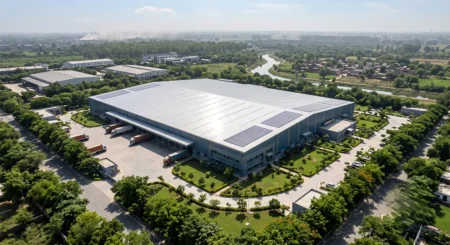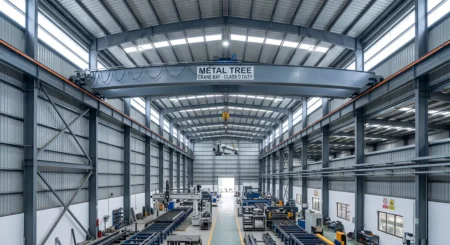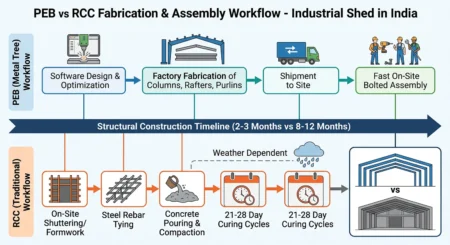
Nearly 59% of India’s landmass sits in moderate-to-severe seismic zones, and the eastern and western coastlines routinely absorb cyclones with wind speeds crossing 55 m/s. For a structural engineer signing off on a pre-engineered building, that isn’t background trivia – it’s the load case that decides whether a portal frame stands or folds. PEB seismic design in India isn’t optional engineering polish; it’s a code-mandated discipline governed by IS 800, IS 1893, and IS 875 Part 3, and it’s the reason Metal Tree treats every rafter, bracing bay, and base plate as a calculated response to a specific hazard map, not a generic catalog part.
This piece walks structural engineers and compliance officers through exactly how wind load on PEB structures is computed for Gujarat and Odisha’s cyclone belts, how IS 800 and IS 1893 codes interact in a portal-frame seismic check, and how Metal Tree’s engineering desk runs both through STAAD.Pro and Tekla Structures before a single column is rolled.
Key Takeaways
- IS 1893 (Part 1):2016 is the currently applicable seismic code in India – the 2025 revision (which added a new Zone VI for the Himalayan arc) was gazetted in November 2025 and withdrawn by BIS in March 2026 after cost-escalation concerns.
- IS 875 (Part 3):2015 sets basic wind speeds from 33 m/s to 55 m/s across India, with a cyclone factor (k4) of up to 1.15–1.30 applied within 60 km of the Odisha and Gujarat coasts.
- IS 800:2007 governs the Limit State Method for every primary and secondary steel member in a PEB frame.
- Metal Tree runs every frame through STAAD.Pro for code-compliant analysis and Tekla Structures for clash-free BIM detailing before fabrication drawings are released.
What Makes PEB Seismic Design Different in Indian Seismic Zones?
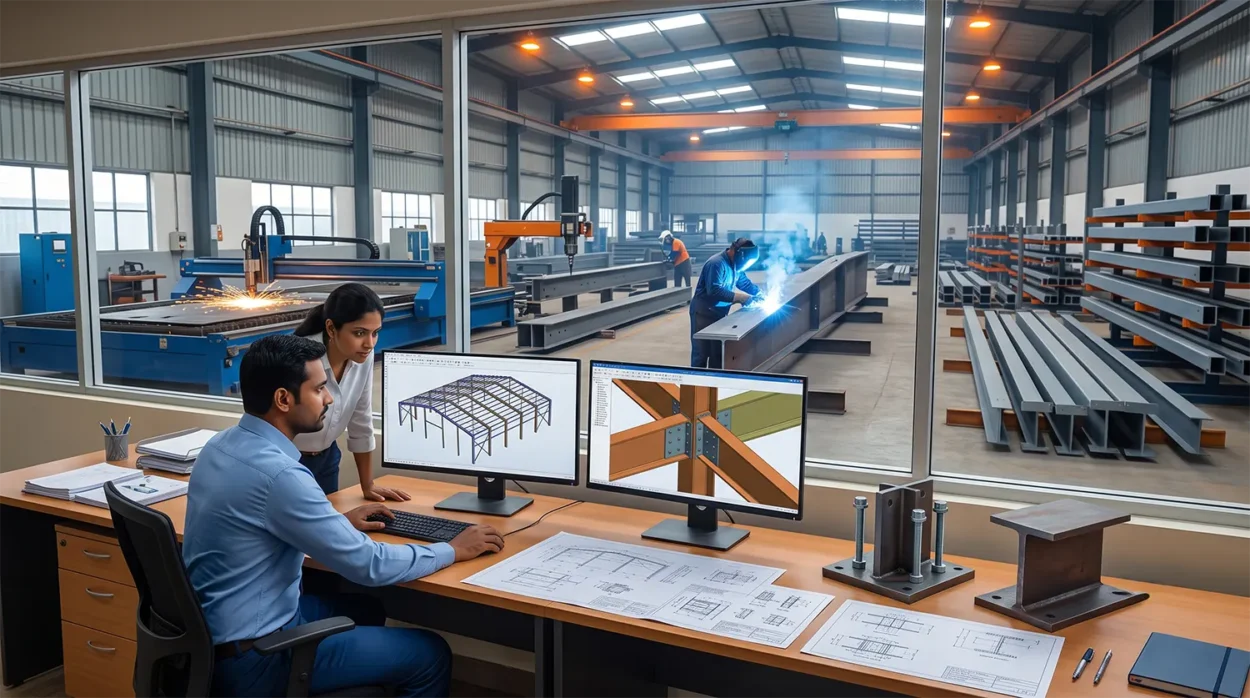
PEB seismic design differs from conventional RCC design because the entire lateral load path – rafter to column to base plate to foundation bolt – is a light, low-mass steel system with a short natural period. That’s actually an advantage under IS 1893, since lighter mass typically pulls a lower base shear, but it also means bracing layout and connection ductility carry almost all the seismic performance.
Under IS 1893 (Part 1):2016, India is currently divided into four seismic zones – II (low), III (moderate), IV (high), and V (very high, covering the Himalayan belt, Kutch, and the Northeast). A pre-engineered building manufacturer designing for Guwahati or Srinagar is working a fundamentally different response spectrum than one designing for Nagpur, and the zone factor (Z) feeds directly into the design base shear calculation. Metal Tree’s design desk pulls the site’s exact zone, soil type, and importance factor before a single member size is proposed – not after. Why does this matter for a warehouse or factory shed that “just needs a roof”? Because an under-designed bracing bay in Zone IV or V doesn’t fail gracefully – it fails as a progressive collapse, and IS 1893 exists precisely to prevent that failure mode in PEB seismic design.
How Does IS 1893 Govern Seismic Design for Pre-Engineered Buildings?
IS 1893 sets the design seismic force through the zone factor, importance factor, response reduction factor, and the building’s fundamental time period – and right now, every PEB in India is still designed to the 2016 edition, not a newer one. Here’s why that matters for anyone specifying codes on a compliance document today.
BIS notified a seventh revision, IS 1893 (Part 1):2025, in November 2025. It introduced a new Zone VI for the entire Himalayan arc using Probabilistic Seismic Hazard Assessment instead of the older deterministic mapping. The Ministry of Housing and Urban Affairs flagged cost escalation of 10–15% in Zones V and VI for buildings – and far higher for infrastructure projects – along with concerns about inadequate stakeholder consultation. BIS withdrew the 2025 edition through a March 3, 2026 gazette notification, reinstating IS 1893 (Part 1):2016 as the currently applicable standard.
For compliance officers, this rollback is a live reminder that referencing “IS 1893” on a drawing title block isn’t enough – the edition year has to be current, and Metal Tree’s documentation always states “IS 1893 (Part 1):2016” explicitly, so a NOC or third-party proof-check never gets flagged for an ambiguous code reference.
Metal Tree’s structural team applies IS 1893 to every PEB job in three concrete steps:
- Zone and soil classification – confirming Z (zone factor) and site soil type (rock, medium, or soft) from the current 2016 zone map, not any withdrawn draft.
- Response spectrum method – for regular portal frames, the simplified static method is generally adequate, but Metal Tree runs full response spectrum analysis in STAAD.Pro for irregular plans, mezzanines, or crane-supporting frames.
Ductile detailing at connections – moment connections, base plates, and anchor bolts are sized for the higher of wind or seismic demand, since one of these two lateral cases almost always governs over the other in PEB spans.
What Does IS 800:2007 Require for Steel PEB Structures in India?
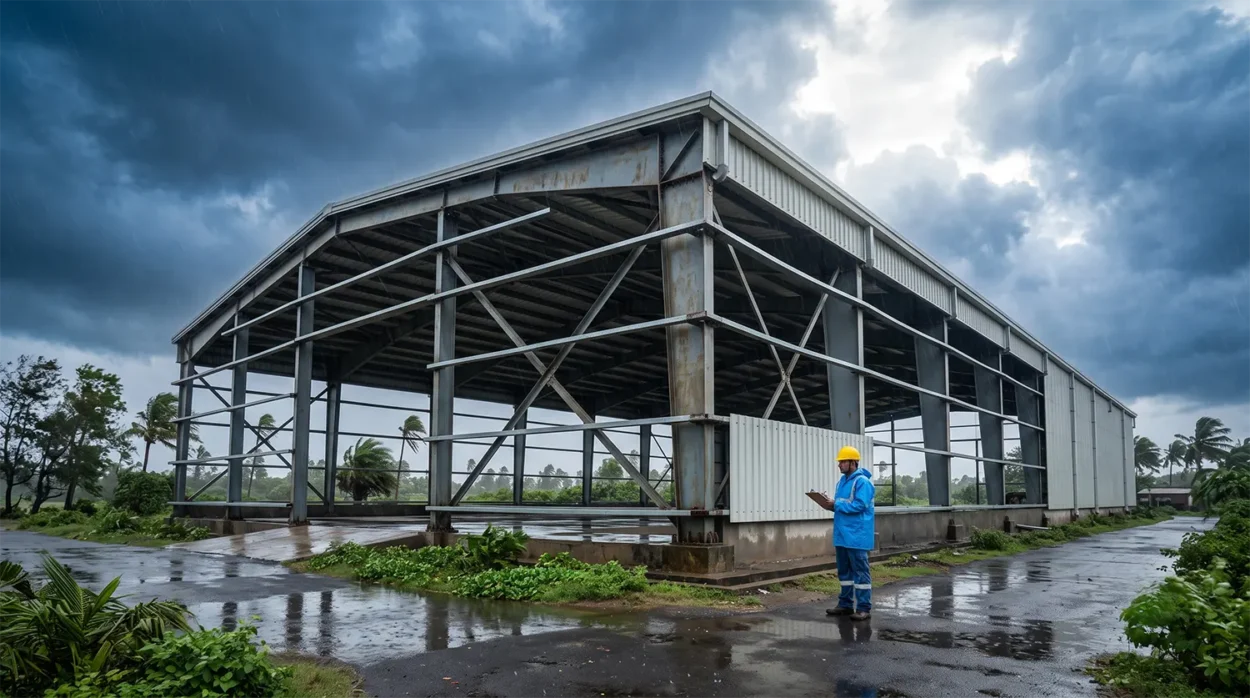
IS 800:2007 is the general steel design code, and it governs the Limit State Method calculations for every rafter, column, purlin, and bracing member in a Metal Tree building – regardless of which lateral load (wind or seismic) governs the frame. It sets the partial safety factors for loads and materials, member classification (plastic, compact, semi-compact, slender), and the deflection and drift limits a PEB frame has to satisfy.
For tapered built-up sections – the defining geometry of a pre-engineered frame – IS 800 Clause 8 (bending members) and Section 9 (combined stresses) are applied at every taper change, not just at the deepest point of the rafter. This is where generic steel sheds cut corners: checking only the critical section and assuming the rest of the taper is automatically safe. Metal Tree’s STAAD.Pro models check stress ratios at every node along the tapered haunch, so no section is under-verified. Isn’t a taper-optimized frame supposed to save steel? It is – but only if every check point along that taper is actually verified against IS 800, not interpolated.
Explore Our Building Solutions
Discover our range of engineered building solutions designed to meet diverse industrial and commercial construction requirements. Explore the right products for your next project.
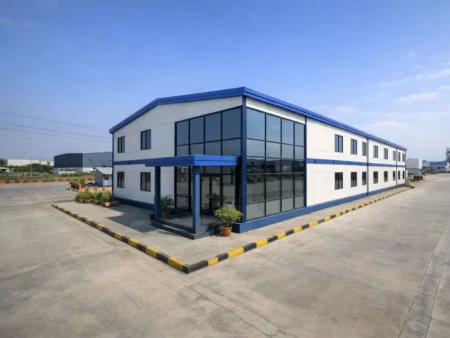
PEB Warehouse Buildings
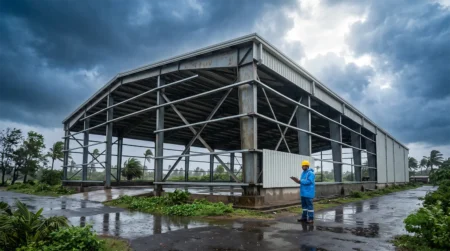
For warehouses in cyclone-prone or seismic regions, PEB warehouse buildings can be designed around site-specific wind loads, structural requirements, and operational needs.
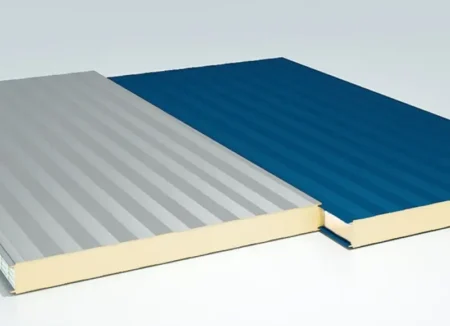
Insulated Sandwich Panels
In addition to structural design, selecting suitable [insulated sandwich panels] for roofing and wall cladding can support thermal performance and building envelope requirements.
Light Gauge Steel Frame (LGSF)
For projects requiring lightweight steel framing, [Light Gauge Steel Frame systems] offer an alternative construction approach that should be evaluated according to the building’s structural requirements.
How Is Wind Load Calculated for PEB Structures in Cyclone-Prone Gujarat and Odisha?
Wind load on PEB structures is calculated under IS 875 (Part 3):2015 using the design wind pressure formula pz = 0.6 × Vz², where Vz is the design wind speed after applying four site-specific factors to the map’s basic wind speed. This single formula is the reason a shed in Ahmedabad and an identical shed in Puri need completely different purlin spacing and cladding fastener schedules.
IS 875 Part 3 divides India into six basic wind speed (Vb) zones, ranging from 33 m/s in the interior peninsula to 55 m/s along the coastal cyclone belt covering Odisha (Puri, Brahmapur), the Andhra coast, Tamil Nadu, and the Andaman Islands. The 2015 revision added the k4 cyclonic-importance factor after cyclones Phailin (2013) and Hudhud (2014) exposed under-designed wind speeds along this coast – for critical structures within the 60 km coastal belt on both the east coast and the Gujarat coast, k4 can reach 1.15 to 1.30, meaning the effective design wind speed on a hospital or shelter-grade structure near Puri can approach 70 m/s.
Metal Tree applies all four factors on every coastal job:
- k1 (probability/risk factor) – raised for buildings with a longer design life or higher occupancy importance.
- k2 (terrain, height, and structure size) – a PEB shed at 8 m eave height in open coastal terrain sees a very different k2 than the same shed shielded by an industrial park.
- k3 (topography factor) – relevant for ridge-top or hillside sites, ranging up to 1.36 on slopes over 3°.
- k4 (cyclonic importance factor) – mandatory within the 60 km coastal belt on the Odisha and Gujarat coasts, and it is exactly the factor that a generic, non-region-specific PEB design tends to miss.
On coastal warehouse projects near the Gujarat and Odisha ports Metal Tree has engineered, the corner and edge cladding zones (Zone A and B in IS 875 Table 5) consistently need a suction coefficient far steeper than the average roof pressure – sometimes -1.8 to -2.4 versus the -0.8 to -1.2 used for the general roof face. Sheds designed on face-average pressure alone are the ones that lose corner sheeting first when a cyclone makes landfall; Metal Tree’s cladding and fastener schedules are always zoned, never averaged.
Metal Tree’s Engineering Workflow: STAAD.Pro and Tekla Structures in Practice
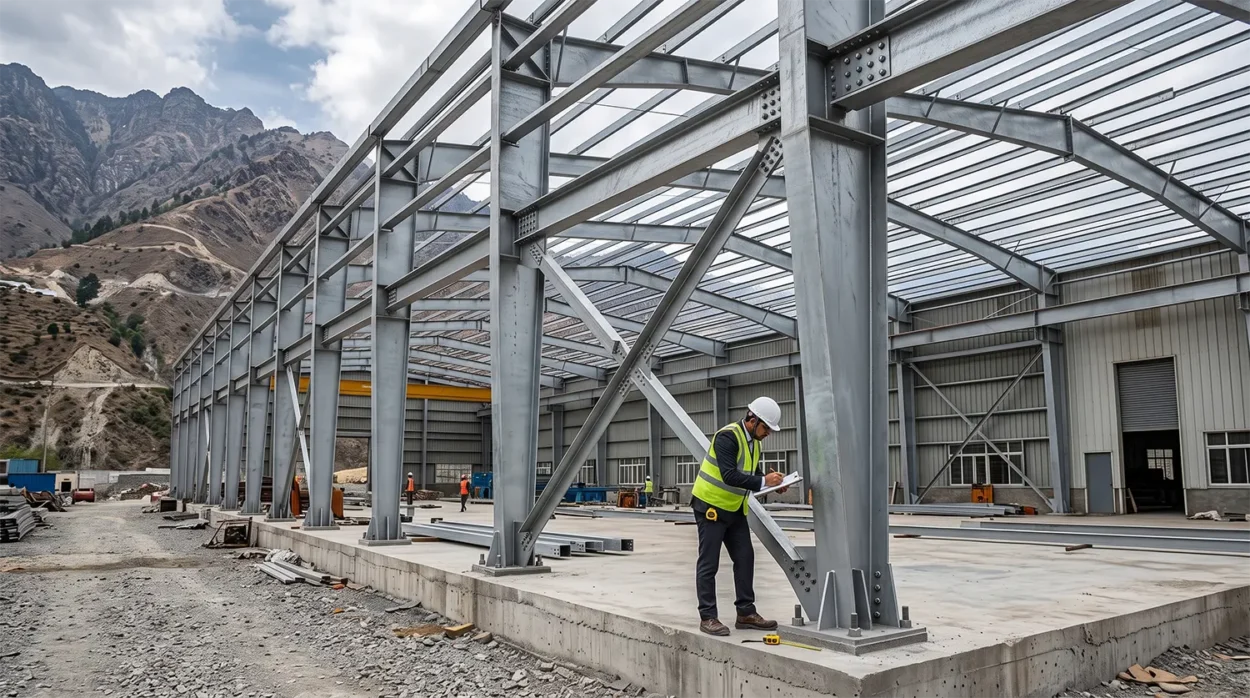
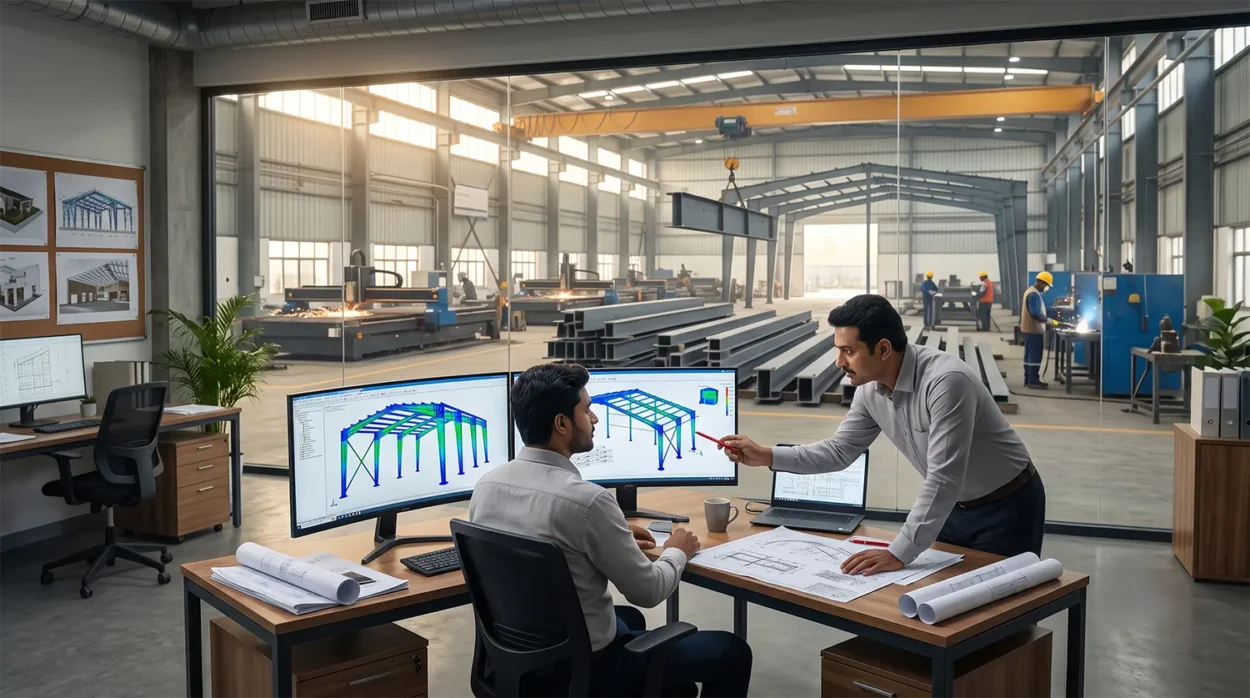
Every Metal Tree PEB frame runs through a two-software pipeline before fabrication release. STAAD.Pro performs the structural analysis and IS-code design check – applying IS 875 wind loads, IS 1893 seismic loads, and IS 800 member design in combination, and iterating tapered-section sizes until every load combination clears its capacity ratio. Tekla Structures then takes the analyzed frame into full 3D BIM detailing, generating connection designs, bolt schedules, and fabrication drawings that are clash-checked against purlins, girts, bracing, crane brackets, and mezzanine framing before a single plate is cut.
This isn’t a “nice to have” workflow add-on – it’s what separates PEB seismic design done to spec from PEB seismic design done to a rough estimate. A frame that passes STAAD.Pro’s global stability check can still fail in the field if the Tekla model reveals a bolt group clash at a knee joint; catching that at the model stage, not the erection stage, is the entire point of running both tools in sequence. For a Gujarat cyclone-belt warehouse, that combined workflow means the wind load on PEB structures calculated in STAAD.Pro – including the k4 cyclonic factor – flows directly into the connection capacity checks Tekla generates for base plates and anchor bolts, so the numbers erectors see on a fabrication drawing already reflect the governing coastal wind case, not a generic inland default.
Comparing Design Drivers Across India’s Seismic and Wind Zones
| Region | Governing IS Code Driver | Basic Wind Speed (Vb) | Seismic Zone (IS 1893:2016) |
| Delhi-NCR / North India | Seismic often governs for tall/slender frames | 47 m/s | IV |
| Bhuj / Kutch, Gujarat | Wind (cyclone k4) + high seismic | 50 m/s | V |
| Bhubaneswar, Odisha | Wind (cyclone k4) dominant | 50 m/s | III |
| Puri coastal strip, Odisha | Wind (cyclone k4) dominant | 55 m/s | III |
| Guwahati / Northeast | Seismic dominant | 39–47 m/s | V |
| Nagpur / Central India | Neither governs strongly | 39–44 m/s | II |
The practical implication for a compliance officer reviewing drawings: never assume wind governs on the coast and seismic governs inland. Kutch is both a Zone V seismic region and a cyclone-belt wind zone, and Metal Tree’s design brief for any Gujarat coastal project explicitly runs both load combinations to failure, then designs to whichever governs at each individual member – not a blanket assumption for the whole frame.
Why PEB Compliance Documentation Matters as Much as the Calculation
A structural design that meets IS 800 and IS 1893 in STAAD.Pro is only half the compliance picture; the other half is documentation a third-party proof-checker, a municipal authority, or an insurer can actually verify. Metal Tree issues a structural design basis report with every project stating the exact IS code editions used (explicitly IS 1893 (Part 1):2016 given the 2025 edition’s withdrawal), the site-specific Vb and zone factor applied, and the load combinations checked – so a compliance officer isn’t left cross-referencing an ambiguous code year against a gazette notification mid-project.
This is where authoritativeness and trust separate an experienced pre-engineered building manufacturer from a fabricator working off a catalog span table: Metal Tree’s engineering desk tracks BIS code status changes – including the March 2026 rollback – as part of standard practice, not as an afterthought when a client asks.
Frequently Asked Questions
IS 1893 (Part 1):2016 is the currently applicable seismic code as of 2026. BIS withdrew the newer 2025 edition (which added Zone VI) in March 2026 after the Ministry of Housing and Urban Affairs raised cost and consultation concerns, reinstating the 2016 zone map and design parameters.
IS 875 (Part 3):2015 sets basic wind speeds up to 55 m/s along the coastal cyclone belt, including Odisha’s Puri and Brahmapur coast, and up to 50 m/s along Gujarat’s Kutch coast. A cyclonic importance factor (k4) of 1.15–1.30 applies within 60 km of these coastlines.
It depends on location and frame geometry. Along the Odisha coast, wind load on PEB structures typically governs due to cyclone-belt k4 factors. In Himalayan and Northeast regions under IS 1893 Zone IV–V, seismic load usually governs, especially for taller or irregular frames.
STAAD.Pro performs the IS-code structural analysis and member design under combined wind and seismic loads. Tekla Structures then builds the clash-checked 3D BIM model and connection detailing, ensuring the fabrication drawings match the analyzed capacity at every joint, not just the global frame check.
A PEB designed only for wind load can pass a coastal wind check yet still fail an inland seismic bracing check, since IS 1893 governs lateral bracing and connection ductility independently of wind. Metal Tree runs both IS 875 and IS 1893 load combinations on every project regardless of region.
Metal Tree designs pre-engineered steel buildings across India’s seismic and cyclone-prone regions, applying IS 800, IS 1893, and IS 875 Part 3 through a STAAD.Pro and Tekla Structures engineering workflow. For a site-specific structural design basis report for your next warehouse, factory shed, or industrial facility, reach out to Metal Tree’s engineering desk.